
Instagram has remained one of the world’s most popular social media platforms for years. For users, it is a place for daily entertainment, inspiration, and interaction with their favorite creators, while for businesses it has become one of the most important channels for promoting products and services. It is where consumers discover new brands, watch reviews, save products they are interested in, and often begin their purchasing journey.
It is therefore no surprise that Instagram advertising has become an essential part of the marketing strategy for many online stores. Thanks to advanced targeting capabilities and a wide range of ad formats, brands can reach precisely defined audiences and build recognition in a competitive market.
However, reach alone is not enough. Today’s consumers rarely make a purchasing decision after seeing just one ad. Before completing an order, they usually check reviews from other users, watch product reviews, compare prices, and look for additional information. This means that Instagram advertising is often the beginning of the purchasing process rather than the end.
So how can brands use Instagram’s potential not only to increase visibility, but above all to grow sales effectively? More and more advertisers are finding the answer by combining social media campaigns with affiliate marketing. Before moving on to this solution, however, it is worth understanding why Instagram still remains one of the most important promotional channels.
Launch an Affiliate Program and Increase Sales
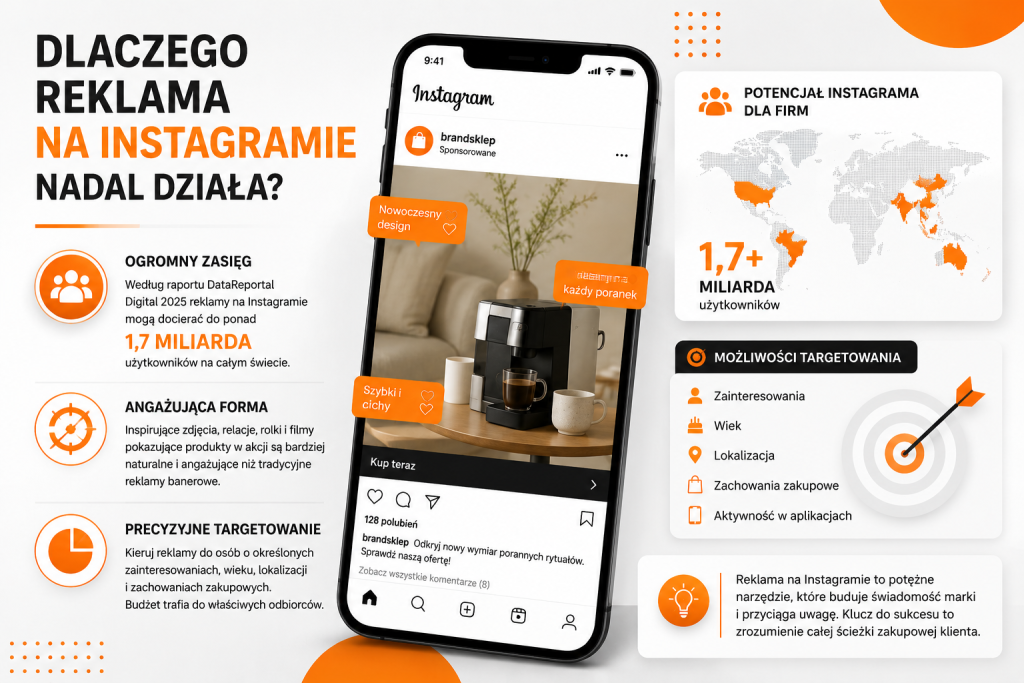
Despite growing competition from TikTok and YouTube Shorts, Instagram remains one of the most important platforms for advertisers. According to the DataReportal Digital 2025 report, Instagram ads can reach more than 1.7 billion users worldwide. This represents enormous potential for both global brands and local online stores.
Instagram’s strength lies primarily in the way products are presented. Instead of a traditional advertisement, users see an inspiring interior arrangement, a short reel testing a cosmetic product, or a video showing how a new device works. This type of format feels much more natural and engaging than traditional banner advertising.
Another major advantage of the platform is precise campaign targeting. Advertisers can direct ads to people based on specific interests, age, location, or purchasing behavior. This helps ensure that the marketing budget reaches audiences who are most likely to be interested in the offer.
However, this does not mean that every campaign will automatically lead to increased sales. To understand why, it is worth taking a closer look at how customers make purchasing decisions today.
Just a few years ago, the purchasing journey was much simpler. A customer saw an ad, visited the store, and made a purchase decision. Today, the process looks completely different. Consumers have access to a vast amount of information, so they rarely buy a product after just one interaction with a brand.
Imagine someone who wants to buy a new coffee machine. While browsing Instagram, they come across a reel showcasing the device. The video catches their attention, but does not lead to an immediate purchase. Instead, they save the post and return to it later.
The next step is to search for opinions on Google, watch reviews on YouTube, or check comments from other users. This is often followed by comparing prices across several stores and looking for current promotions or discount codes. Only after going through this entire process does the customer decide to make a purchase.
This shows that Instagram advertising very often serves as the first point of contact with a brand. It builds interest and encourages users to learn more about the product, but it rarely accounts for the entire purchasing journey. For advertisers, this means that marketing activities need to be planned much more broadly than within a single platform.
Instagram offers enormous opportunities for building brand awareness, yet many advertisers still evaluate campaign effectiveness primarily based on the number of views, likes, or comments. Although these are important metrics, they do not always translate into real sales results.
Imagine two campaigns. The first generates 500,000 views and several thousand likes. The second reaches a much smaller audience but generates several hundred orders. Which one was more effective? From a business perspective, the answer is obvious.
That is why more and more companies are moving away from analyzing so-called vanity metrics and focusing instead on the number of transactions, customer acquisition cost (CAC), conversion rate, and return on ad spend (ROAS). These are the metrics that show whether advertising is actually supporting sales growth.
Of course, this does not mean that reach is unimportant. On the contrary, it is the first stage of building a relationship with the customer. The problem arises when a brand ends its efforts at this stage.
Combine Instagram Advertising With Affiliate Marketing!
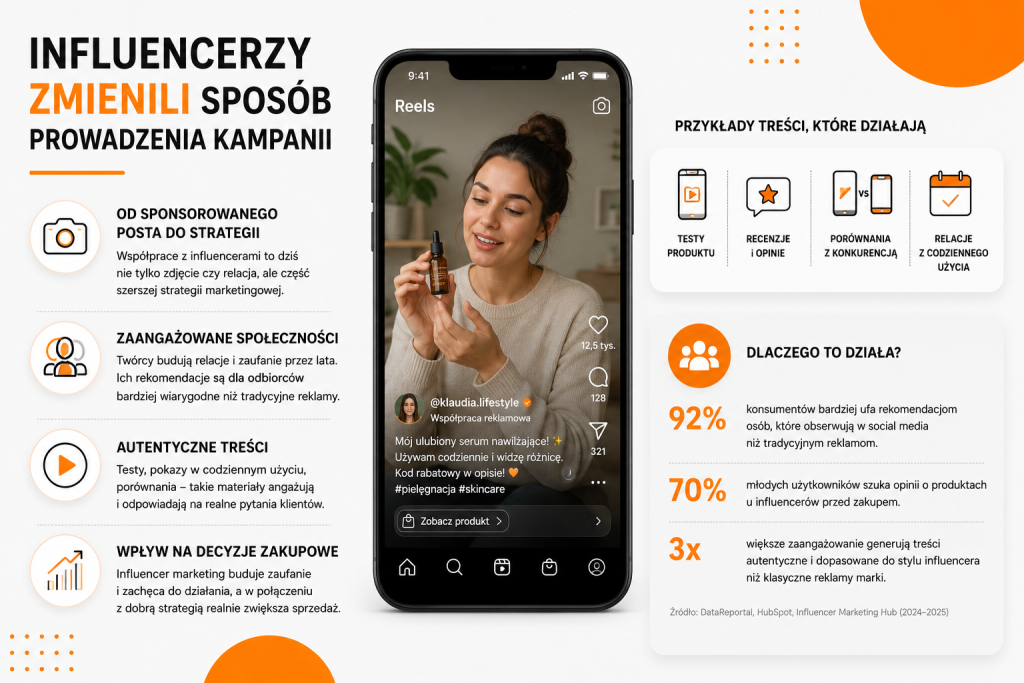
Until recently, working with an influencer mainly involved publishing a sponsored photo or story. Today, such activities are just one part of a much broader strategy.
Today’s online creators build engaged communities around themselves that value their authenticity and experience. Users are far more likely to trust a recommendation from someone they have followed for several years than a traditional advertisement created by a brand.
That is why content showing products in natural situations is becoming increasingly popular – during everyday use, product tests, or comparisons with competing solutions. This type of content not only attracts attention, but also answers the questions potential customers ask themselves before making a purchase.
That is why influencer marketing has become one of the most important elements of modern Instagram campaigns. On its own, it does not always guarantee sales, but it effectively builds trust and encourages audiences to learn more about the brand. When combined with a well-planned marketing strategy, it can significantly increase the effectiveness of advertising activities.
Instagram advertising works extremely well at the beginning of the purchasing journey. It attracts attention, builds brand awareness, and encourages users to learn more about the product. The challenge, however, is that most customers do not make a purchase immediately. They need time, additional information, and reassurance that they are choosing the right product.
This is exactly where affiliate marketing comes into play.
Instead of reaching customers exclusively through paid advertising, the brand gains access to a broad network of partners who promote its offer across different channels. These may include bloggers, influencers, owners of niche websites, price comparison platforms, coupon sites, or newsletter creators. Each of them reaches audiences at a different stage of the purchasing process.
Imagine again someone interested in buying a coffee machine. After seeing an ad on Instagram, a few days later they come across a ranking of the best models, then read a review on a blog, watch a product test on YouTube, and finally find an attractive discount code. All of these elements complement one another and gradually build trust in the brand.
Thanks to affiliate marketing, the advertiser is not present in just one place. The brand can accompany the customer throughout the entire journey to purchase.
It is often assumed that social media advertising and affiliate marketing are two completely separate worlds. In reality, they work best when they are run in parallel.
Instagram is responsible for the first contact with the product. This is where the brand generates interest, presents new products, and reaches new audiences. Affiliate marketing takes over at the later stages of the purchasing process, providing users with information, opinions, and arguments that help them make a decision.
This combination gives advertisers far greater opportunities than relying on a single channel. The brand does not have to depend on the customer making a purchase after seeing an ad for the first time. It can reach them repeatedly using different formats and traffic sources.
This is particularly important in industries where purchasing decisions are more considered, such as electronics, home furnishings, premium cosmetics, or products for children. The higher the order value, the more important additional recommendations and credible reviews become.
Unlock the Full Potential of Performance Marketing
One of the biggest advantages of affiliate marketing is the way campaigns are billed. In traditional advertising activities, a company pays for impressions or clicks regardless of whether the user ultimately makes a purchase.
In affiliate marketing, the Cost Per Sale (CPS) model is most commonly used. This means that the advertiser incurs a cost only when the campaign results in a sale. This makes it much easier to control the budget and assess the profitability of ongoing activities.
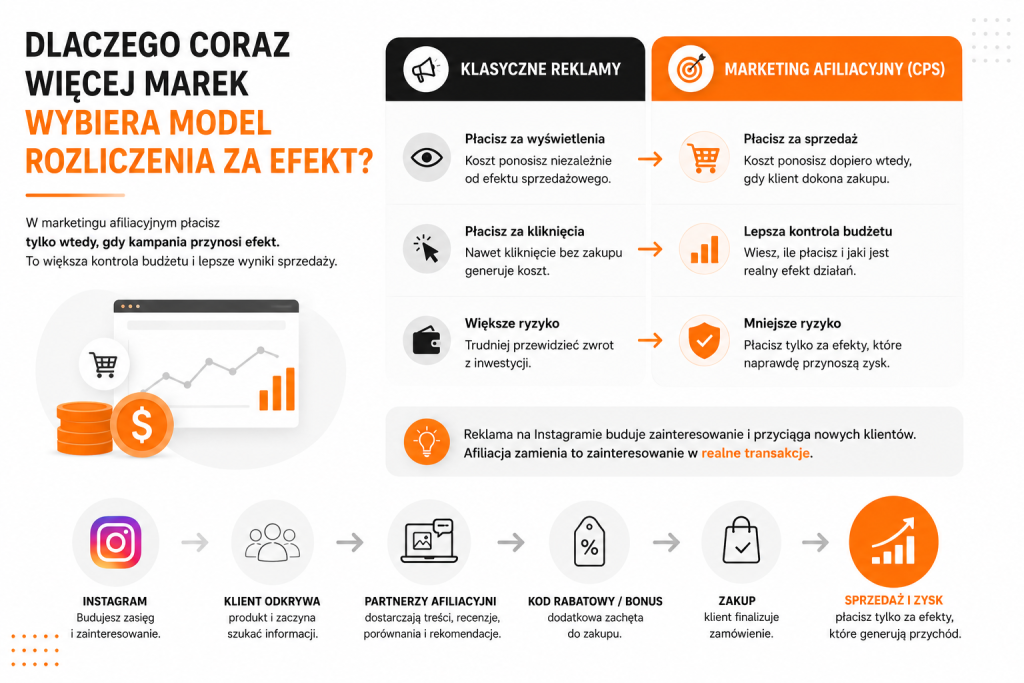
Of course, this does not mean that Instagram advertising is less valuable. On the contrary, it is very often what starts the purchasing process. Affiliate marketing, however, helps make better use of the traffic generated and increases the chances of monetizing it effectively.
For many online stores, this combination is becoming one of the most effective promotional models today. Instagram builds interest, while affiliate marketing helps turn that interest into real transactions.
Running an effective affiliate program requires not only the right technology, but also access to partners who know how to reach the right audiences. That is why many advertisers choose to work with an affiliate network.
WebeAds enables collaboration with different types of publishers – from influencers and online creators, through bloggers and niche websites, to price comparison platforms, coupon sites, and newsletters. This allows the brand to be present at multiple stages of the customer journey rather than relying on a single communication channel.
Another advantage is the ability to fully monitor campaign performance. Advertisers have access to statistics, reports, and sales data, making it easier to optimize activities and make informed marketing decisions. As a result, the budget is used more strategically, and promotional activities can be scaled as the business grows.
Instagram advertising remains one of the most effective ways to build brand awareness and reach new customers. However, it is worth remembering that today’s purchasing journey is much more complex than it was just a few years ago. Customers compare offers, read reviews, watch video content, and look for opinions before making a purchase decision.
That is why the best results are achieved by companies that do not limit their activities to a single channel. Combining Instagram advertising with affiliate marketing makes it possible to reach customers at different stages of the purchasing process, increase the number of brand touchpoints, and convert interest into sales more effectively.
If you want to grow your online store using a performance-based model, it is worth considering launching an affiliate program. With WebeAds, you gain access to a broad network of publishers, transparent statistics, and tools that can help you increase sales in a predictable and scalable way.