
It is no surprise that more and more companies are searching Google for the phrase “who is an influencer”. Advertisers want to understand who online creators really are, how they operate, why they influence consumers’ purchasing decisions, and when working with them can translate into business results.
This is particularly important at a time when traditional advertising faces an increasingly difficult challenge. Users ignore banners, scroll past video ads, and are more likely to trust recommendations from people than brand messages. Influencers fill this gap: they speak the language of their community, present products in a natural context, and can build trust faster than a traditional display campaign.
According to IAB Polska, the global influencer marketing market was estimated at $24 billion in 2024 and is expected to reach $32.5 billion in 2025. In Poland, the market was estimated at around PLN 240 million. This shows that influencer marketing is no longer just an addition to a strategy, but one of the key elements of modern digital marketing.
For advertisers, the key question is no longer simply: who is an influencer? An increasingly important question is: which influencer can genuinely help my brand drive sales, build awareness, and acquire new customers?
An influencer is a person who, through their knowledge, lifestyle, expertise, personality, or authentic relationship with their audience, can influence their opinions, choices, and purchasing decisions.
The word itself comes from the English word “influence”. In practice, an influencer is an online creator who has built a community around themselves and regularly communicates with it through content published on social media, a blog, YouTube, TikTok, Instagram, LinkedIn, Twitch, or a newsletter.
For advertisers, however, one thing is key: an influencer is not just “someone with reach.” A good influencer is someone who has the trust of their community. It is this trust that can make a product recommendation more effective than a standard advertisement.
An influencer can:
That is why, from a business perspective, an influencer is not just a content creator. They are a marketing partner who can operate at different stages of the sales funnel: from the first interaction with the brand all the way through to conversion.
Combine Influencer Marketing with Affiliate Marketing and Pay for Results
The power of influencers comes from the mechanism of trust. Audiences often follow a particular creator every day: they see their lifestyle, opinions, recommendations, failures, successes, and everyday choices. Over time, this relationship can begin to feel like a personal connection, even if it is one-sided.
From a marketing perspective, this is a major advantage. Traditional advertising says: “buy our product.” An influencer can say: “I use this product, and it worked well for me in this situation.” The second message feels more natural because it comes from context and a relationship.
Influencers affect purchasing decisions because they combine several elements:
For example, a cosmetics brand can describe the ingredients of a cream on a landing page. A beauty influencer can show how the product performs on the skin after a week of use, answer followers’ questions, and compare it with other cosmetics. For the audience, this type of content is more useful than a traditional banner ad.
That is exactly why influencer marketing is shifting today from the realm of “attractive posts” to measurable performance marketing. Brands no longer want visibility alone. They want to know which content, which creator, and which community generate real results.
Not every influencer works in the same way, and not every creator will be a good fit for every campaign. That is why advertisers should understand the basic classification of online creators.
Nano influencers usually have around 1,000 to 10,000 followers. Their audience is relatively small, but often highly engaged. These creators build close relationships with their followers and are perceived as authentic.
For brands, nano influencers are a good choice when the goal is product testing, a local campaign, barter-based collaboration, or reaching a niche audience. They often work well in industries such as beauty, parenting, lifestyle, food, and local services.
Micro influencers most often have between 10,000 and 100,000 followers. They are one of the most interesting groups for advertisers because they combine relatively strong reach with a high level of engagement.
Micro influencers often specialize in specific topics: skincare, fitness, technology, personal finance, travel, fashion, education, or gaming. Their audiences know what to expect from them, which makes their recommendations more credible.
Macro influencers have around 100,000 to 1 million followers. They offer brands broad reach and often professional-quality content production. They work well in brand awareness campaigns, product launches, and campaigns where quickly reaching a large audience is important.
Working with macro influencers, however, requires a larger budget and a precise brief. The number of followers alone does not guarantee sales.
Mega influencers have more than one million followers and often operate similarly to traditional celebrities. Their strength lies in recognition, scale, and the ability to build broad reach in a short period of time.

This is a good choice for large brand awareness campaigns, but not always the best option for performance-driven activities. When it comes to sales, smaller, specialized creators often prove to be more effective.
No. This is one of the biggest myths in influencer marketing.
Many advertisers still assume that the larger the account, the better the campaign. However, broad reach does not always mean strong influence. An influencer with hundreds of thousands of followers may generate an impressive number of views but very little sales. In contrast, a micro influencer with a smaller but loyal community may deliver a better return on investment.
That is why, when choosing a creator, it is worth analyzing not only the number of followers, but also:
For advertisers, what matters is not how many people follow an influencer, but how many of them may genuinely be interested in the product. This is where data, affiliate marketing, and performance-based payment come into play. If an influencer receives an individual affiliate link or discount code, the brand can determine whether the collaboration actually generates sales, rather than just reach.
Join WebeAds and turn influencer influence into real sales.
Brands invest in collaborations with influencers because online creators combine three things: reach, trust, and content. This combination is difficult to achieve through traditional advertising.
An influencer’s recommendation works differently from a brand advertisement. It is more personal, grounded in context, and often based on experience.
If a tech creator presents a new device, tests it, and explains who it is best suited for, their audience receives concrete value. The brand does not simply showcase the product, but reaches the audience through someone they trust.
Influencers allow brands to reach very specific communities: young parents, healthy lifestyle enthusiasts, gamers, people interested in skincare, travelers, entrepreneurs, or premium customers.
This is particularly important for advertisers who do not want to waste budget on broad campaigns but are looking for high-quality contact with the right audience.
Working with an influencer is not just about a single post. It also means content: photos, reels, reviews, unboxings, stories, tutorials, and video materials. This content can later support paid social campaigns, landing pages, newsletters, or affiliate activities.
For brands, this means saving time and making communication more authentic. Content created by influencers often looks more natural than materials produced in a studio.
The biggest change in recent years is that influencer marketing is increasingly being compensated not only for publications, but also for results.
Affiliate links, discount codes, dedicated landing pages, and conversion tracking make it possible to measure a creator’s real impact on sales. This direction is particularly important for advertisers who want to combine influencer marketing with performance marketing.
In the past, working with an influencer was often simple: the brand paid for a post, the creator published the content, and the results were evaluated based on reach, likes, and comments.
Today, advertisers expect more. They want to know whether the campaign generated sales, leads, registrations, or valuable traffic. That is why influencer marketing is increasingly being combined with affiliate marketing.
How does it work?
The influencer receives an individual affiliate link or discount code. They promote the product through their channels, and every sale or action completed by a user is attributed to that specific creator. The advertiser can see the results in the system and evaluate the effectiveness of the collaboration.
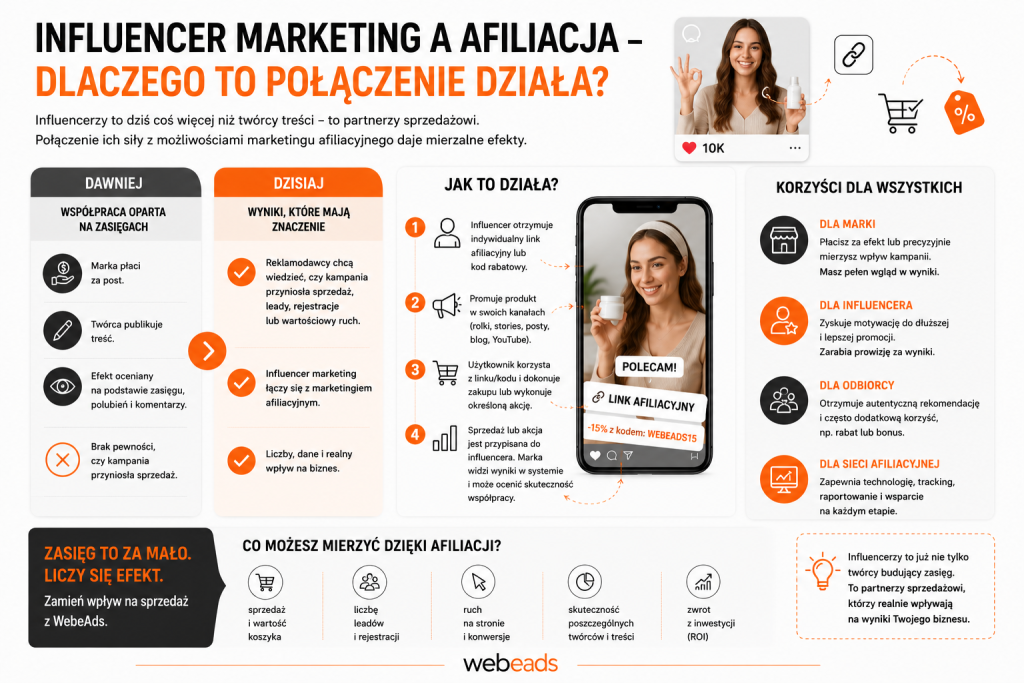
This model benefits everyone:
That is why influencers are increasingly becoming part of affiliate programs. They are no longer just creators who build reach. They are becoming sales partners.
WebeAds helps brands move from intuitive influencer collaborations to a model based on data, measurement, and results.
For advertisers, this means greater control over the campaign. Instead of selecting creators randomly and evaluating collaborations solely based on reach, brands can analyze specific results: clicks, leads, sales, average order value, traffic quality, and the effectiveness of individual partners.
WebeAds Supports Advertisers in Areas Such As:
This is particularly important for brands that want to invest in influencer marketing but do not want to base their decisions solely on follower count or profile aesthetics.
WebeAds helps answer the question that matters most to advertisers: which influencer actually supports my business?
Don’t Waste Your Budget on Random Campaigns. With WebeAds, You Choose Creators, Measure Results, and Scale Only What Works.
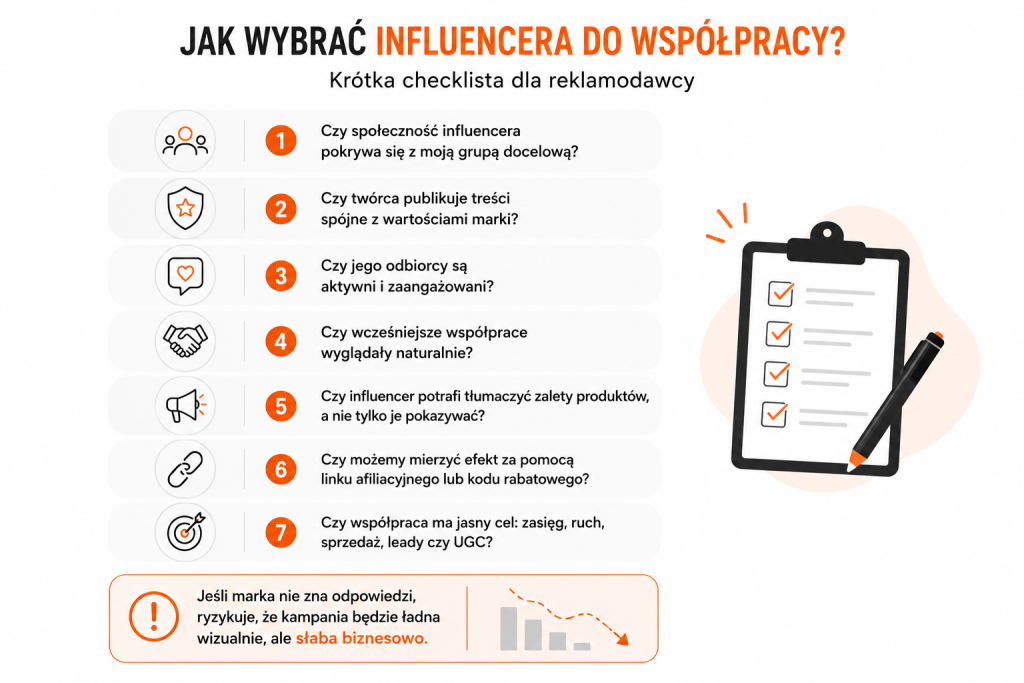
Before starting a collaboration, it is worth answering a few questions.
Put simply, the answer to the question “who is an influencer” is: an influencer is a person who can influence the decisions of their community through trust, authenticity, and regular interaction with their audience.
But from an advertiser’s perspective, this definition is much broader today. An influencer can be a content creator, brand ambassador, source of valuable traffic, affiliate partner, and a real driver of sales.
The most effective brands no longer ask only: “how many followers does the influencer have?”. They ask: “does their community fit our brand, and what results can they generate?”.
If you want to work with influencers in a measurable way, without guesswork or wasting your budget, join WebeAds. Gain access to creators, publishers, affiliate links, and reports that show which collaborations truly deliver results.
WebeAds Helps Brands Turn Influencer Impact Into Real Business Results.