
Online commerce (e-commerce) has been breaking sales records for several years. The pandemic only accelerated this process, permanently changing consumers’ shopping habits. Today it is clear that e-commerce is no longer just an addition to a sales strategy — in many industries it has become its foundation. Online stores are growing not only in number, but also technologically and organizationally. In this context, the affiliate industry is becoming one of the key marketing channels, enabling sales to scale in a “pay only for results” model.
Affiliate marketing (a partner program) is a cooperation model in which the advertiser (an online store) promotes its products with the help of publishers — partners who publish links and advertisements in exchange for a commission on sales. The settlement usually takes place in the CPS (cost per sale) or CPL (cost per lead) model, which means that the store pays only for actually generated conversions.
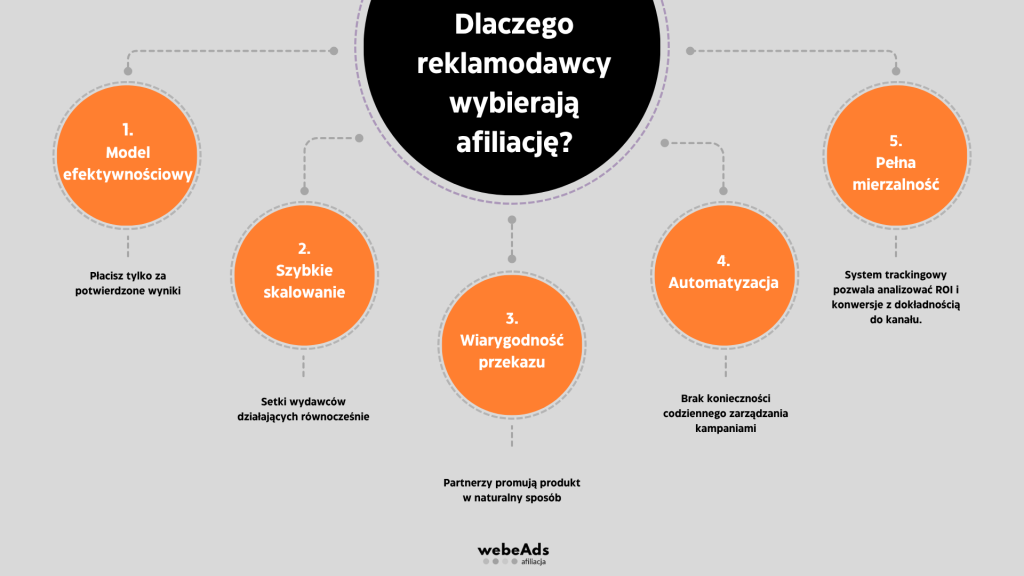
This system makes it possible to build a virtual network of sellers — from bloggers and influencers to coupon websites and price comparison platforms. Importantly, affiliate marketing grows automatically and in the background, without requiring daily campaign management.
Grow your e-commerce business with affiliate marketing
In Poland, e-commerce has grown by more than 18% year on year. More and more transactions are taking place via smartphones, which means that stores must be mobile-friendly and fast. Customers expect convenience, transparency, fast payments (e.g. BLIK), real-time support (e.g. chatbots), and trustworthy reviews.
It is also worth noting that during the pandemic, some e-commerce sectors exploded: consumer electronics and home appliances (+270%), household chemicals (+216%), and bookstores (+85%). This shows how strongly consumer behavior responds to socio-economic conditions. For advertisers, this means the need for flexibility and rapid scaling, which affiliate marketing enables best.
Publishers in affiliate networks can be divided into:
The advertiser decides who they want to work with. They can accept or reject partner applications, set commission rates, bonuses, and restrictions.
| Channel | Startup cost | Settlement model | Traffic control | Example of use |
|---|---|---|---|---|
| Affiliate marketing | Low | For results | Medium | Cosmetics store |
| Google Ads | High | Per click | High | Home appliance store |
| Social Media Ads | Medium | Per reach/traffic | High | Fashion, lifestyle |
| Influencers (without affiliate marketing) | High | Upfront (flat fee) | Low | Premium, niche segments |
Affiliate marketing combines efficiency with flexibility and often serves as an excellent complement to other campaigns.
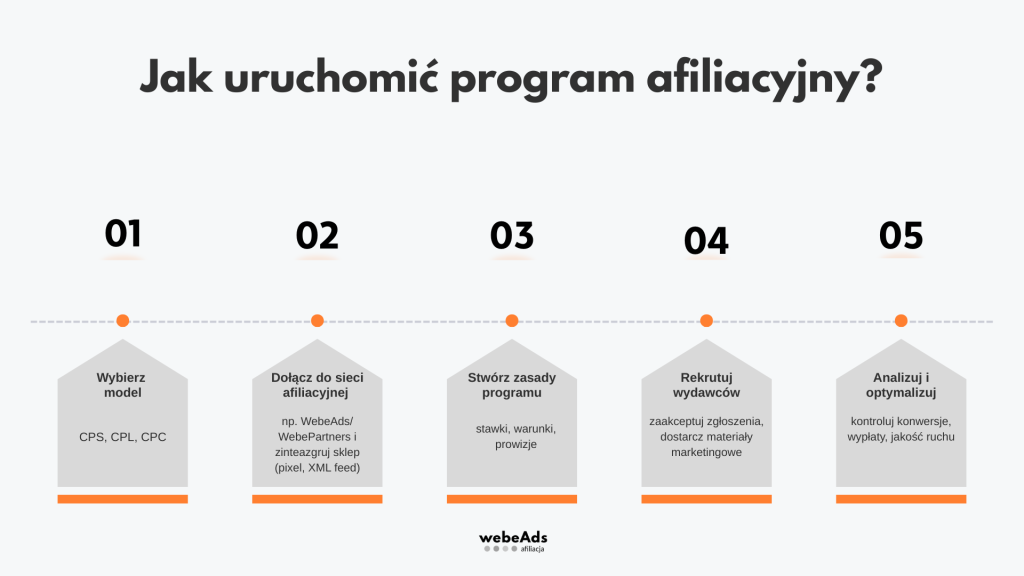
The affiliate industry is a real source of support for the fast-growing e-commerce sector. It makes it possible to pay only for results, allows cooperation with hundreds of partners, and helps reach precisely selected target groups. In a world where flexibility, automation, and measurability matter, affiliate marketing is becoming not just an alternative, but a foundation of effective promotion.