

Sales leads are one of the most important assets for any growth-oriented organization. In theory, everything seems simple – a user leaves their contact details, and the company converts them into a customer. In practice, however, this process is much more complex and requires both the right marketing strategy and an efficient sales process.
Many companies focus solely on increasing the number of leads, treating it as the main measure of success. In reality, however, true competitive advantage does not come from volume, but from the ability to convert leads effectively. This is where the biggest losses most often occur – leads are ignored, handled too late, or receive poorly matched communication.
In this article, we will look at five areas that have a real impact on sales lead conversion and that, when implemented properly, can significantly improve sales results without the need to increase the marketing budget.
Sales leads are people or organizations that have interacted with a brand and provided contact details that enable further communication. This could include signing up for a newsletter, completing a quote request form, or downloading educational material. However, simply acquiring a lead does not yet create any business value – that value only emerges when the contact moves through the subsequent stages of the sales process.
The biggest challenge today is not generating leads itself, but properly qualifying and handling them. In practice, many organizations lose potential customers at a very early stage, before any real sales conversation even takes place. The most common reasons are a lack of segmentation, delayed contact, or poorly matched communication.
For this reason, an effective lead management strategy should include not only marketing activities, but also integration with sales processes and analytics.
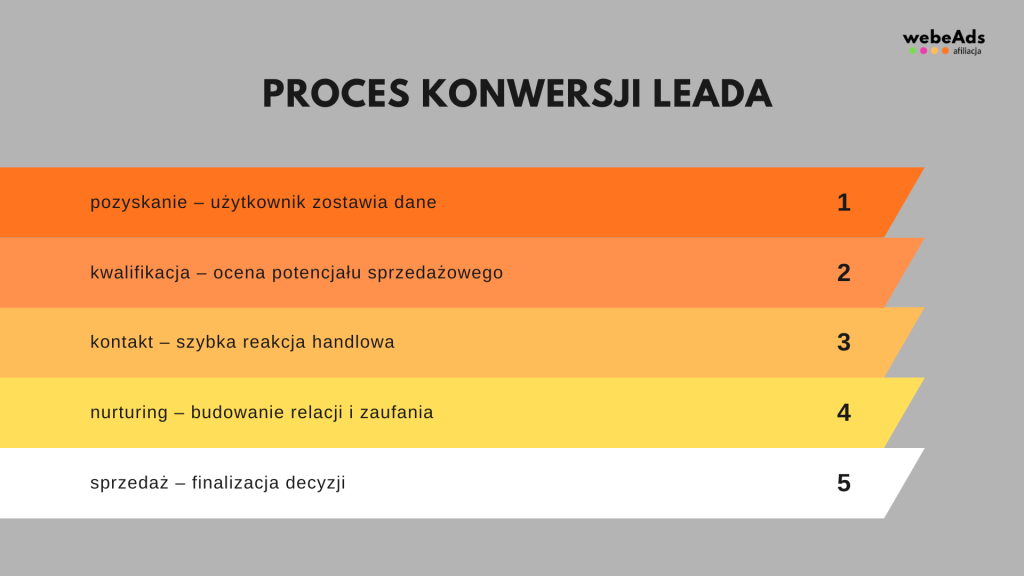
From a business perspective, lead conversion is one of the most underestimated metrics. Unlike the number of acquired contacts, which is often treated as a vanity metric, conversion has a direct impact on revenue.
Improving the efficiency of the sales process by just a few percentage points can have a greater impact on financial results than significantly increasing website traffic or the advertising budget. This is because conversion optimization allows companies to make better use of the potential they have already acquired.
Importantly, improving conversion does not always require major investments. It is often the result of streamlining processes, reducing response times, or better tailoring communication to the audience’s needs.
Get More Customers With Our Network
One of the most common mistakes is treating all leads as a homogeneous group. In reality, they differ not only in their level of interest in the offer, but also in their needs, budget, and stage of the decision-making process.
Segmentation helps organize this complexity and bring structure to subsequent activities. It makes it possible to tailor communication, the offer, and the timing of contact to a specific audience. In practice, this means greater relevance and a significantly higher probability of conversion.
In mature organizations, segmentation does not stop at basic demographic or firmographic data. It increasingly also takes user behavior into account, including activity on the website, interactions with content, and the history of contact with the brand. These are the data points that make it possible to assess a lead’s sales potential most accurately.
In the digital world, speed is crucial. A user who leaves their contact details is at a specific stage of the decision-making process – they are interested, actively looking for a solution, and often comparing offers from different companies.
Every hour of delay in making contact reduces the chance of successful conversion. In practice, this means that the company that responds first often gains an advantage, even if its offer is not the cheapest.
Response speed should be treated as part of the strategy, not merely an operational detail. Implementing the right processes, automation, and CRM system integrations can significantly reduce response times and increase the effectiveness of sales activities.
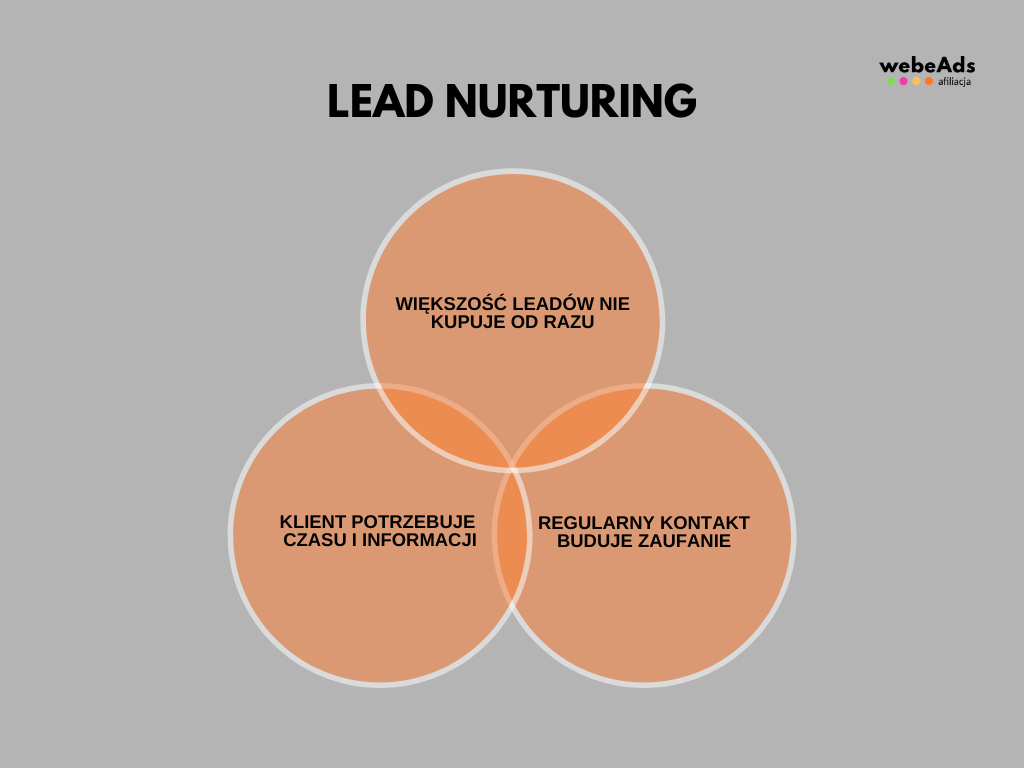
Not every lead is ready to make a purchase at the time of the first contact. In many industries, especially in B2B, the decision-making process takes place over time and requires multiple interactions with the brand.
Lead nurturing involves intentionally guiding users through this process by providing valuable content, education, and gradually building trust. The key is to understand that sales do not begin with the sales conversation itself, but much earlier, at the stage when the user is consuming content.
A well-designed nurturing process not only helps increase conversion, but also improves the quality of leads passed on to the sales team. A customer who is better informed and more aware of the value of the offer makes decisions faster and less often requires additional sales efforts.
Modern audiences are accustomed to communication tailored to their needs. Generic, mass messaging is becoming less effective because it does not address users’ specific problems and expectations.
Personalization is not limited to simply using a person’s name in a message. Above all, it is the ability to understand the context in which the lead finds themselves and provide content that is genuinely valuable to them.
In practice, this means integrating data from different sources and building a consistent view of the customer. Companies that can use this information effectively achieve higher conversion rates and build stronger customer relationships.
Start Generating Valuable Leads With WebeAds
The final, yet often overlooked, element is the user experience on the website and throughout the entire process of interacting with the company. Even the best-designed marketing campaign will not deliver results if the user encounters barriers at the conversion stage.
Overly complicated forms, an unclear offer, or the lack of a clear call to action can effectively discourage a potential customer. Optimizing these elements requires not only marketing knowledge, but also analysis of user behavior and continuous testing of different variants.
Companies that treat UX as an integral part of the sales process can significantly increase the effectiveness of their activities without having to increase traffic or the advertising budget.
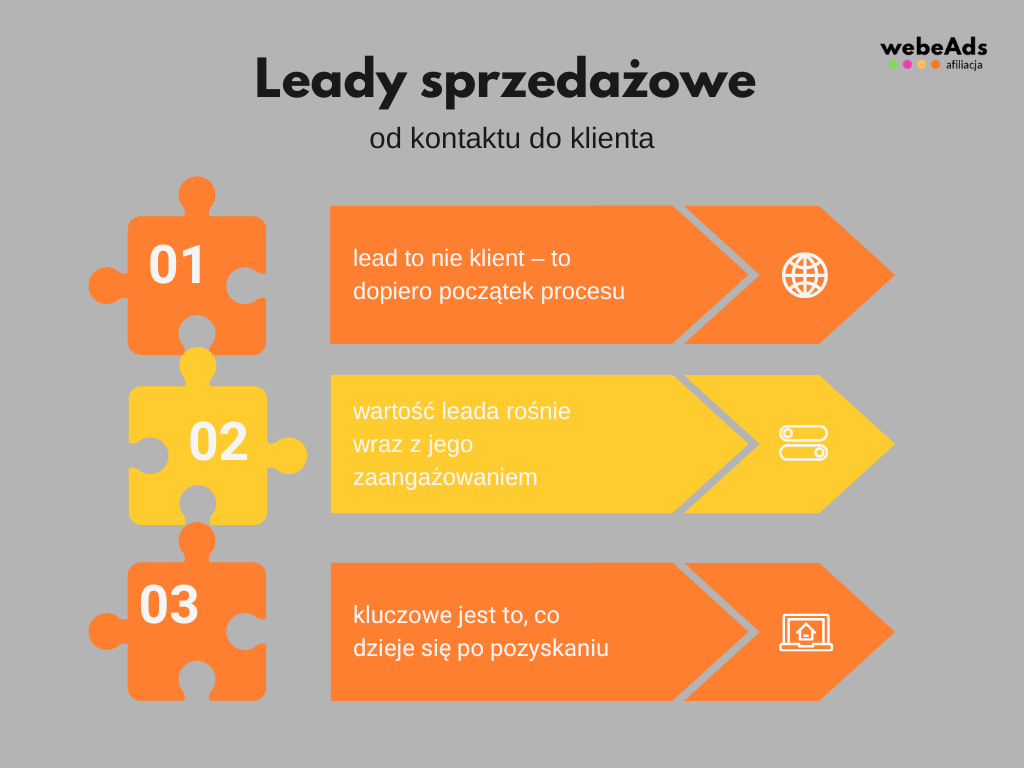
When analyzing sales processes across different organizations, recurring patterns of mistakes can be observed. One of them is a lack of alignment between the marketing and sales teams, which leads to situations where leads are passed on without the proper context.
Another common problem is an excessive focus on acquiring new contacts while neglecting those already in the pipeline. As a result, the full sales potential is not being utilized.
The lack of analytics and measurement of the effectiveness of individual stages of the process is also significant. Without data, it is difficult to make informed decisions and optimize activities.
Join WebeAds and Start Scaling Your Sales Today
Sales leads are the starting point for building customer relationships, but their true value only becomes apparent during the conversion process. It is at this stage that companies have the greatest opportunity to influence business results.
Effective lead management requires a systematic approach that includes marketing, sales, and data analysis. Segmentation, response speed, lead nurturing, personalization, and user experience optimization are the areas that have the greatest impact on success.
Implementing these elements not only increases conversion, but also helps build long-term customer relationships and a competitive advantage in the market.