

In today’s article, we will explore why a private label is a key element for any business. We invite you to delve into the essence of a private label and understand its role in building brand recognition and customer loyalty.
A private label is now present in almost every retail chain. It is a comprehensive set of values, features, and experiences that a customer associates with a given product or service. It is a promise of quality, reliability, and consistency that builds the foundation of trust between a business and the consumer market. It is a key element in building a company’s image and reputation, and it can determine its success or failure. The growth of the private label market and market saturation make a private label an essential tool for standing out from other companies and gaining customer loyalty.
The origins of private labels go far back in history. The first mentions of private labels appeared as early as ancient times, when craftsmen and merchants marked their products with their own symbols or initials. One of the earliest examples of private labels was the pharaoh’s seal, which served as proof of product quality. One of the pioneers of private label on an industrial scale was the American entrepreneur Aaron Montgomery Ward, who in 1872 introduced mail-order catalogs featuring his own products under the “Montgomery Ward” brand. Since then, private labels have become a key element of business strategy for many companies around the world.
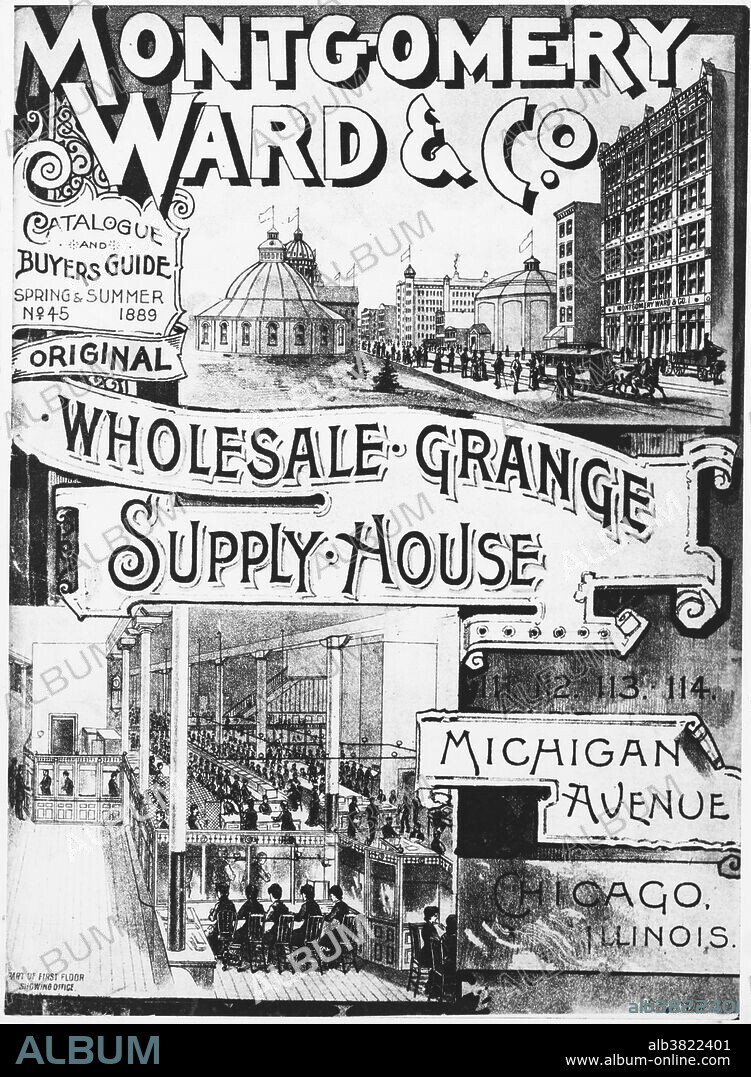
A private label, when consistently developed and maintained, can become a source of trust and customer loyalty. A consumer may identify with a given brand and is often inclined to make repeat purchases and recommend products to others. Moreover, a strong private label can attract new customers through positive reviews and recommendations, leading to increased sales and the company’s financial stability.
Sign up for webeAds and get access to exclusive tools to increase sales!
Click here and discover more!
In this chapter, we will discover why having your own brand brings numerous benefits. Ready for new perspectives in business? Let’s move on!
Imagine having control over every detail of private label products — from the raw materials used in their production to the way they are presented to customers. That is exactly the kind of control having your own brand gives you. You can ensure high-quality private label products, adapt them to trends and the needs of your consumers, and offer something unique that sets you apart from the competition, even in international markets.
By having a private label, you gain the ability to closely control the quality of your products. You can choose the best raw materials, supervise the production process, and check whether the product’s origin meets high quality standards. What is more, you can personalize your consumer products so that they better match the needs and preferences of your customers, which in turn builds loyalty and trust in customer relationships.
Proper management of a private label can help increase the profitability of your business by eliminating intermediaries. Thanks to direct contact with consumers and selling your products without the involvement of other companies, you can maximize your profits. In addition, by controlling the entire production and distribution process, you can optimize costs and manage your resources efficiently.
One of the key advantages of having a private label is building recognition in the market. It is worth investing in a variety of promotional campaigns to increase your brand’s visibility and attract the attention of potential customers. Remember that the key to success is consistent brand building and consciously creating an image that will be associated with high quality and professionalism.
Through quality control, the elimination of intermediaries, and effective promotion, a recognizable private label can become a key factor contributing to the success of your business.
An exciting stage lies ahead of you: launching a private label!
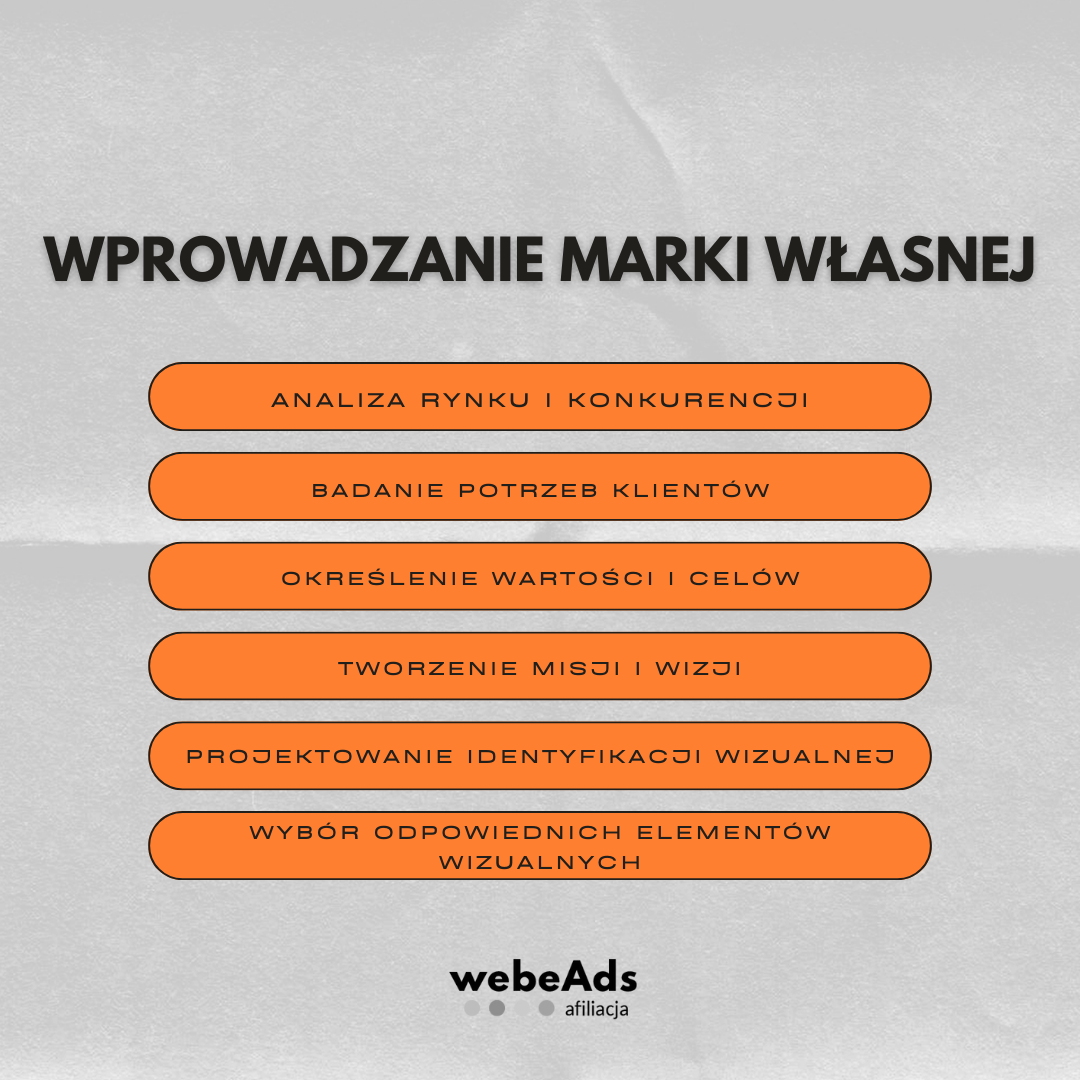
Start by diving into the ocean of market data. Observe the competition, brand segmentation, and the private label product market, and learn from their successes and failures. It’s like chess — you need to know your opponent’s moves in order to win the game. 🙂
Put yourself in your customers’ shoes. What inspires them? What frustrates them? How do they perceive brands in the online community? Get to know consumers’ desires and concerns so that you can design a brand that speaks to their hearts.
Your brand is not just products bearing a private label. It is an idea that is meant to change the world! So define what matters most to you and how you want to contribute to the community.
Develop your mission — it is like a compass that guides you through the stormy waves of business challenges. Your vision is your dreams in full color, and your values are the foundations on which you build your brand.
Create a logo for your private label products that is instantly recognizable and memorable. Your visual identity is your business card — don’t let it go unnoticed.
Remember that every detail matters. Choose colors, fonts, and graphics that perfectly reflect what your brand stands for.
Why do we choose private labels? Who are they for? In this chapter, we will look at several inspiring examples that have succeeded in the market through a strategic approach to building their identity and effective marketing activities.

It is one of the most iconic examples of a successful private label, offering, among other things, apparel. Its brand image, innovative approach to product design, focus on high quality, and unique aesthetics have contributed to creating a brand that inspires loyalty and trust among customers worldwide.
This is the private label of retail giant Costco. Products under this brand include a wide range of household goods, including home cleaning products. Kirkland Signature enjoys great popularity due to its high product quality, competitive prices, and the trust built by the Costco brand. Thanks to its availability in Costco stores, the Kirkland Signature brand has gained a wide base of loyal customers, which has contributed to its success in the household chemicals market.
This is the private label cosmetics brand of one of the largest retail chains, Sephora. It offers a wide range of beauty products, including makeup, skincare, fragrances, and accessories. Sephora Collection is highly popular due to its attractive prices, high product quality, and innovative solutions in makeup and skincare. Thanks to its wide availability in Sephora stores and online, the Sephora Collection brand has gained a large base of loyal customers worldwide.
This is a private label owned by Walmart, one of the world’s largest retail chains. Great Value private label products include a wide range of groceries, fresh products, household items, cosmetics, pet supplies, and much more. Great Value is popular due to its competitive prices and high product quality. This has contributed to the evolution of private labels. Thanks to its wide availability in Walmart stores around the world, Great Value is one of the most recognizable and popular private labels in the retail industry.
Founded by Elon Musk and considered a premium private label, it is an excellent example of a brand that has revolutionized the automotive industry. Its innovative approach to electric vehicles, along with a consciously built brand image based on advanced technology and sustainability, has contributed to achieving a leading position in the market.
A popular supermarket chain in the grocery sector that has developed its own private labels and offers a wide range of products, such as “Winiary,” “Łowicz,” or “Chłopskie Jadło.” Known as private label products, they include food items, cosmetics, household goods, and much more. Biedronka ensures high product quality and often offers them at attractive prices, which contributes to their popularity among customers. Thanks to its strong presence in the Polish retail market, Biedronka’s private label products play a significant role in the company’s business strategy.
It is a brand of motor oils and related products owned by ExxonMobil. Mobil 1 offers a wide range of high-quality motor oils, lubricants, coolants, and other products designed for vehicle care and maintenance. The brand is highly regarded among drivers and mechanics for its high standards of quality and performance.
By analyzing these brand segments, we can see that interest in private labels continues to grow. The key to success is consistently building a unique image based on values and innovation, as well as effectively using marketing activities that engage and inspire customers.
Click here and start earning as an advertiser!
See also: