
Online shopping has become a natural part of consumers’ everyday lives. Today, customers buy not only electronics, clothing, and cosmetics online, but also groceries, supplements, home furnishings, financial services, and access to apps. For advertisers, this represents a huge opportunity, but also greater competition than ever before.
Simply having an online store is not enough. In just a few minutes, customers can compare offers from multiple brands, check reviews, watch a product review, find a discount code, and only then make a decision. According to the Gemius report “E-commerce in Poland 2024,” 78% of Polish internet users shop online, while the DataReportal report indicates that 5.56 billion people worldwide were using the internet at the beginning of 2025. This demonstrates the scale of the market, but also the scale of the competition for customers’ attention.
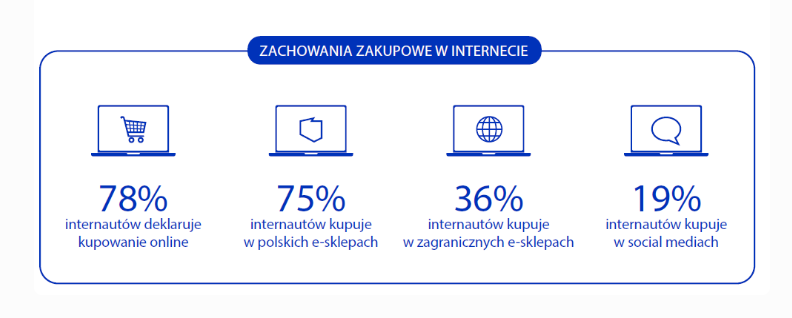
Gemius report “E-commerce in Poland 2024
For advertisers, the key question is no longer: “is it worth selling online?”, but: how can they effectively reach customers before they choose a competitor? Answering this requires understanding the entire customer journey, not just the final click in the shopping cart.
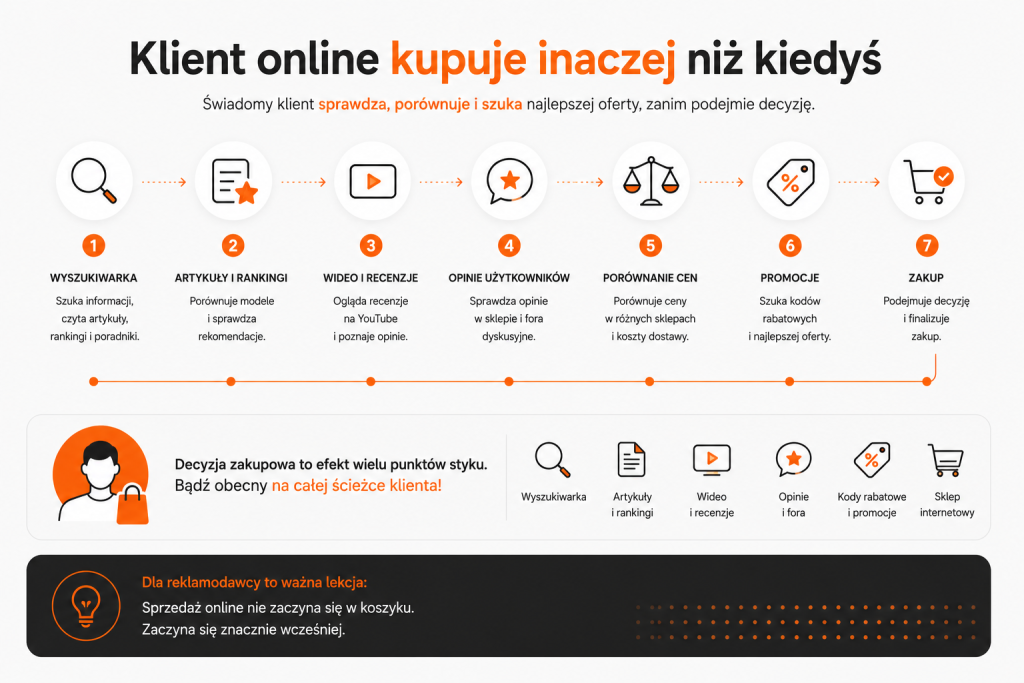
Just a few years ago, online shopping most often began with a search engine. Customers entered the name of a product, compared prices, and chose a store. Today, the process is much more complex. Consumers may first see a product on TikTok, then read a review on a blog, watch a review on YouTube, check the price on a comparison website, and finally look for a discount code.
This means that purchasing decisions are rarely made after a single interaction with a brand. Customers need several touchpoints: inspiration, information, reassurance about quality, and often an additional incentive to make a purchase. That is why effective online sales require a presence across multiple channels at the same time.
Mobile commerce also plays a significant role. More and more people browse products and complete purchases on their smartphones. If a website loads slowly, the form is too long, or the payment process is inconvenient, users quickly switch to a competitor. In e-commerce, even small elements of the shopping experience can affect conversion rates.
Do You Want to Increase Online Sales?
Today’s customers are more informed and cautious. They do not just want to see a product ad. They want to know whether the product meets their needs, how it compares with other offers, and whether other users are satisfied with it.
Imagine someone who wants to buy a coffee machine. First, they type “best coffee machine under PLN 2,000” into Google. They find rankings and guides. Then they watch a review on YouTube, check customer feedback in an online store, compare prices, and look for promotions. Only after several interactions with different types of content do they decide to make a purchase.
For advertisers, this is an important lesson: online sales do not begin in the shopping cart. They begin much earlier: in search engines, social media, expert articles, reviews, newsletters, and influencer recommendations. A brand that is present only at the end of this journey often loses out to competitors that have been building trust from the very first interaction.
Price still matters, but it is no longer the only factor determining a purchase. Customers pay attention to reviews, delivery times, payment convenience, return options, the credibility of the store, and the quality of the product presentation.
Trust is hugely important. Consumers are more likely to buy from a store they know, have heard of, or see featured in valuable content. That is why content marketing, SEO, and influencer marketing play such an important role in e-commerce. They help build credibility even before customers reach the product page.
Promotions also play an important role. A discount code, cashback, or free delivery can determine whether a customer completes their purchase. This does not mean that a brand should compete solely on price. Rather, it is about giving customers an additional reason to buy when they are already close to making a purchase.
Many advertisers still base their online sales mainly on a single channel, most often Google Ads or Meta Ads. This may work for a while, but it is risky. Click costs are rising, competition is increasing, and users make decisions across multiple channels at the same time.
Effective e-commerce marketing should combine different activities. SEO helps reach people looking for information. Content marketing educates and builds trust. Social media inspire and show products in an everyday context. Influencer marketing strengthens recommendations. Email marketing reminds customers about the offer and encourages them to return to the store.
Only by combining these channels can advertisers create a strategy that works across the entire customer journey. They are no longer competing solely for the last click, but building the brand’s presence from the customer’s initial interest through to the completion of the transaction.
Join WebeAds and discover how affiliate marketing can support online shopping at every stage of the customer decision-making process.
Affiliate marketing fits perfectly with the way online shopping works today. Customers often discover a store’s offer not directly through an advertisement, but through a blog, ranking, price comparison website, discount code platform, influencer, newsletter, or specialist portal.
This is precisely where affiliate marketing gives advertisers a major advantage. It allows them to work with multiple partners who reach customers at different stages of the purchasing decision. A blogger can educate, an influencer can demonstrate the product in practice, a comparison website can help customers choose, and a discount platform can help close the sale.
Most importantly, however, affiliate marketing allows advertisers to pay for results. Instead of paying solely for reach or clicks, they pay for a sale, lead, or another defined action. For online stores, this is a safe way to scale sales, especially when the marketing budget needs to be carefully controlled.
WebeAds helps brands reach customers where they actually make purchasing decisions. The affiliate network connects advertisers with publishers, influencers, content platforms, comparison websites, promotional sites, and partners who can support online sales through a performance-based model.
For advertisers, this means greater control over their budget. A campaign can be developed based on data: the number of transactions, average order value, traffic source, sales quality, and actual return on investment. This means the brand does not have to guess which activities work best – it can measure and scale them.
WebeAds is particularly well suited to online stores that want to increase sales without relying their entire strategy solely on paid advertising. Affiliate marketing makes it possible to expand reach, connect with new audiences, and maintain a performance-based payment model at the same time.
One of the biggest mistakes in online sales is viewing the customer solely through the lens of the last click. If a user made a purchase after using a discount code, this does not mean that their earlier interactions with the brand were irrelevant. They may have previously read a review, watched a video, clicked on an ad, or come across an expert article.
Therefore, an effective strategy should not rely on a single channel. Online shopping is a process, not a single event. Advertisers who understand this process can plan their budgets more effectively, select better-performing partners, and build sales in a more predictable way.
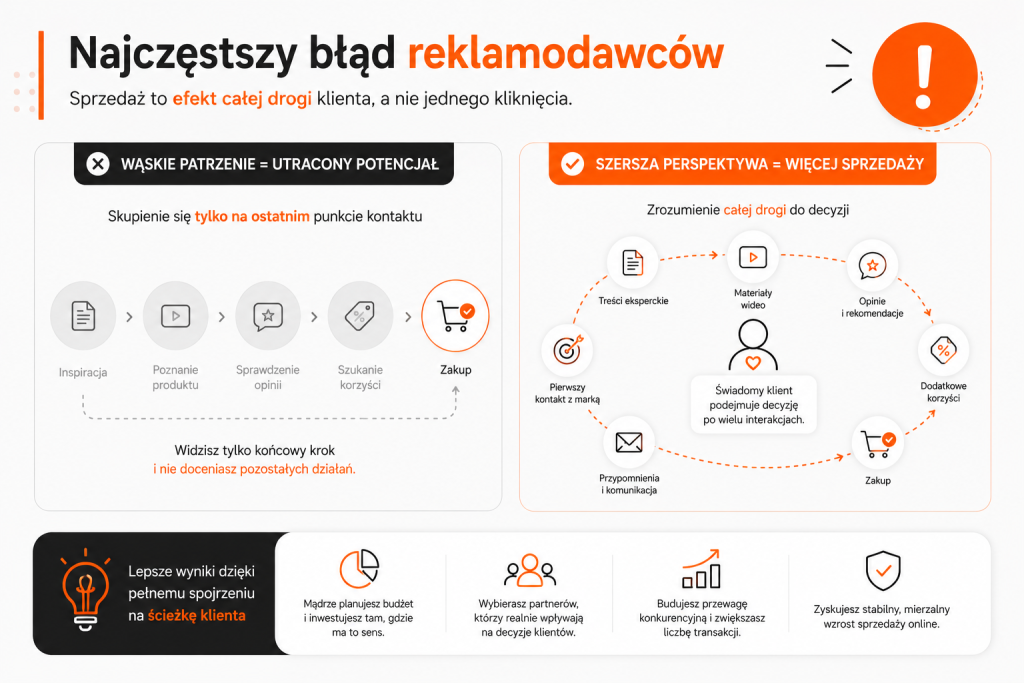
Online shopping does not begin when someone clicks “buy now.” It begins much earlier – in search engines, social media, blog articles, reviews, comparison websites, newsletters, and influencer recommendations.
That is why advertisers who want to sell effectively online need to be present throughout the entire customer journey. Driving traffic to the store is not enough. They also need to build trust, support the decision-making process, and give users a reason to choose their offer.
Affiliate marketing brings these elements together in a single measurable system. With WebeAds, advertisers can collaborate with publishers and influencers, reach customers across multiple channels at the same time, and pay for real results.
Do You Want to Increase Online Sales Without Wasting Your Budget?