Cookies in Marketing: How to Increase Sales with Cookies?
15 July 2024
Have you ever wondered what makes websites “remember” your preferences or why the ads you see online are so relevant? The answer is cookies. These small text files play a key role in online marketing, helping companies understand users and tailor their strategies. In this article, we will look at what cookies are, how they work, and how they can be used to increase sales.
What Are Cookies?
You have probably come across the message “this website uses cookies” while browsing the Internet. But what exactly are these files? In short, they are small text files placed on your device by the websites you visit. They serve various purposes, from tracking user activity, through storing user preferences, to personalizing advertising content.
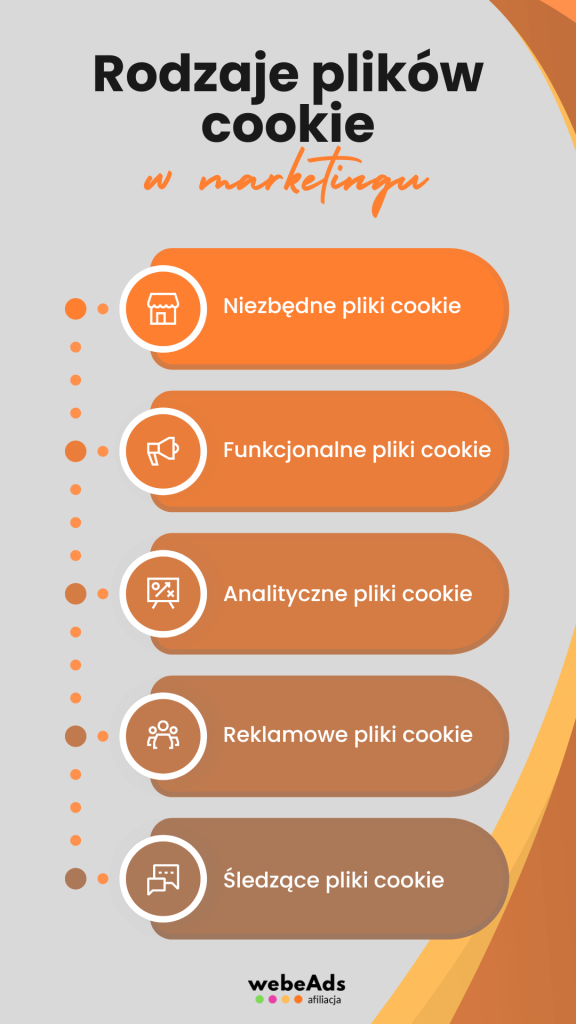
There are many types of cookies that differ in their purpose:
Essential cookies: These cookies are crucial for the proper functioning of a website. Without them, many website features would not work correctly.
Functional cookies: These cookies allow websites to remember user choices, such as language or region.
Analytical cookies: These cookies collect data on how a website is used, which helps optimize its performance.
Advertising cookies: These are used to display ads tailored to the user’s interests.
Tracking cookies: Used to track browsing habits in order to deliver more relevant advertising content.
Cookies – What Are Their Functions and What Data Do They Collect?
The functions of cookies include:
Maintaining a user session after logging in to a website.
Storing user settings and preferences.
Personalizing advertising content.
Tracking user behavior for analysis and website optimization.
They can collect various types of data, such as:
IP address
Browsing history
Login data
Language preferences
The data is processed to improve the user experience and enable more effective ad targeting. It is also important to pay attention to the cookie policy, which every website should have. This policy explains which cookies are used, what they are used for, and what data is processed. User consent to cookies is often required for a website to function properly.
Cookies perform many important functions in marketing campaigns. Thanks to them, companies can better understand their audience and tailor their strategies to user needs. Here are some of the main functions of cookies in marketing:
Tracking user activity: Tracking cookies make it possible to monitor users’ browsing habits. This allows for delivering more relevant advertising content.
Ad personalization: Advertising cookies collect data about user preferences, which makes it possible to create personalized ad campaigns. Users see ads that are more relevant to them, which increases the chances of conversion.
Campaign performance analysis: Analytical cookies collect data on the effectiveness of advertising campaigns. Thanks to them, you can monitor which ads perform best and optimize marketing strategies.
Maintaining user sessions: Essential cookies help maintain user sessions on websites, which is especially important for e-commerce sites, where users can add products to their cart and continue shopping later.
Cookies – Why Do Websites Use Them?
Websites use cookies for many reasons that help them manage content and user interactions more effectively. Here are some key reasons:
Better understanding of users: Cookies provide valuable information about user behavior. Thanks to this, websites can better tailor their content and offers to the needs of their visitors.
Increased user engagement: Content personalization made possible by cookies makes users more engaged and encourages them to spend more time on the site. This, in turn, increases the chances that they will make a purchase or use the services offered.
Optimization of advertising campaigns: Thanks to the data collected by cookies, companies can better plan and manage their advertising campaigns. Cookies make it possible to analyze the effectiveness of different marketing channels and adjust strategies in real time.
Increased conversions: Tracking user activity and personalizing ads help increase conversion rates. Users are more likely to make a purchase when they see ads that match their interests and needs.
Easier website navigation and usability: Functional cookies remember user settings and preferences, making the website more user-friendly and intuitive. Users do not have to enter the same information every time, which improves their experience.
Cookies – Examples of Their Use in Marketing
Remarketing
They allow you to track users who visited a website but did not make a purchase. This makes it possible to show them ads reminding them of the products they viewed, increasing the chances of completing the transaction.
Offer Personalization
Based on the data collected by cookies, websites can tailor promotional offers to individual user preferences, which increases their effectiveness.
User behavior analysis
Analytical cookies collect data on browsing habits and interactions with content on the website. This allows companies to better understand which elements of the site attract the most attention and what actions users take.
Cookies can be divided into different categories depending on their function and how they operate. In the context of managing user data, the key categories are:
Analytical cookies: These cookies are used to collect data about how users interact with a website. They gather information about the pages visited, the time spent on the site, and interactions with various elements of the website. They help companies optimize their websites by improving usability and functionality.
Operational cookies: Essential for the proper functioning of a website. They enable the use of basic features such as site navigation and access to secure areas. Without these cookies, the website would not function properly.
How to manage analytical cookies?
Managing analytical cookies involves several key steps:
Cookie consent: Users must give their consent to the placement of analytical cookies. The cookie policy should clearly explain what type of data is collected and for what purpose it is processed. User consent is required under regulations governing the protection of personal data.
Configuration and monitoring: Analytical tools, such as Google Analytics, make it possible to configure cookies and monitor the data collected. It is important to configure these tools appropriately so that they collect only the data necessary for analysis.
Website optimization: Based on the data collected by analytical cookies, website content and features can be optimized to better meet users’ needs. Analytics makes it possible to identify areas that require improvement and to track the effectiveness of the changes introduced.
How to manage operational cookies?
Operational cookies are essential for the proper functioning of a website, so managing them is less complex but equally important:
Enabling cookies: Users should be informed of the need to enable operational cookies for the website to function properly. Websites should provide instructions on how to enable cookies so that users can activate them on their own.
Storage and security: Operational cookies should be properly protected to safeguard user data from unauthorized access. Appropriate security measures should be applied, such as data encryption and regular security updates.
Deleting and disabling cookies: Websites should allow users to easily delete or disable operational cookies. The cookie policy should include information on how to clear cookies and what consequences may result from disabling cookies.
Cookies – policy
Every website should have a cookie policy that explains:
What cookies are used on the website.
What data is collected by cookies.
What the collected data may be used for.
How users can manage their cookie settings, including how to enable or disable them.
Regulations governing the processing of cookies
The processing of cookies is regulated by personal data protection laws, such as the GDPR in the European Union. Companies must comply with these regulations by providing users with transparent information about the data collected and the ability to manage their cookie preferences.
Cookies in affiliate marketing
Cookies – How to make money from them in affiliate marketing?
Affiliate marketing is a strategy in which publishers (affiliates) promote the products or services of sellers (advertisers) in exchange for a commission for each sale or action they generate. Cookies play a key role in tracking these interactions and ensuring that affiliates receive the commission they are entitled to.
Tracking clicks and conversions: When a user clicks on an affiliate link, a cookie is placed on their device. Tracking cookies make it possible to monitor when a user completes a purchase or another desired action (e.g., registration), allowing the commission to be attributed to the appropriate affiliate.
Persistent cookies: In affiliate marketing, persistent cookies are often used, which can track user activity over a specified period (e.g., 30 days). This means that even if the user does not make a purchase immediately, the affiliate can still receive a commission if the user returns to the site and completes a purchase later.
Cookies – Examples of the use of cookies in affiliate marketing
E-commerce affiliate programs: Platforms such as Amazon, eBay, or Allegro use cookies to track which purchases were initiated through affiliate links. This allows them to accurately attribute commissions to affiliates.
Promotion of online services: Online services such as hosting, streaming subscriptions, or online courses also use cookies to monitor which affiliate referred a new customer.
Remarketing campaigns: Affiliates can use analytical and advertising cookies to create remarketing campaigns that target users who previously clicked on an affiliate link but did not make a purchase.
Want to start earning money online? Sign up for webeAds and gain access to exclusive tools to boost your sales! Click here and discover more! TRY IT FOR FREE!
Benefits of using cookies in affiliate marketing
Accurate tracking: Cookies enable precise tracking of user activity, which is crucial for assigning the appropriate commissions to affiliates.
Long tracking period: Persistent cookies allow user activity to be tracked over a longer period, increasing the chances of attributing a commission for a sale even several weeks after the initial click.
Improved campaign performance: Thanks to the data collected by cookies, affiliates can optimize their campaigns, better target ads, and increase the effectiveness of their marketing efforts.
Regulations governing cookies in affiliate marketing
Affiliate marketing must comply with regulations governing the processing of personal data, such as the GDPR. Here are the key aspects to consider:
User consent: Before placing cookies on users’ devices, their explicit consent must be obtained.
Transparency: Users must be informed about what data is collected באמצעות cookies and for what purpose it is processed.
Right to withdraw consent: Users must be able to easily withdraw their consent and delete cookies.
Cookies – How to implement effective affiliate strategies?
Choosing the right affiliate programs: Choose programs that offer long tracking periods and transparent rules for commission attribution.
Optimizing affiliate content: Make sure the content promoting products or services is valuable and engaging, which increases the chances of clicks and conversions.
Using analytical tools: Use tools that make it possible to monitor the effectiveness of affiliate campaigns and optimize activities in real time.
Summary
Cookies are used to track user activity, personalize content, and optimize advertising campaigns. In this article, we discussed how they work, their functions, and their applications, particularly in the context of affiliate marketing. The data collected by cookies makes it possible to better understand users and tailor offers to their needs, which translates into higher conversion rates and stronger customer loyalty. The examples showed how different industries use cookies to increase the effectiveness of their marketing activities. It is important to remember about personal data protection and compliance with regulations such as the GDPR. Transparency and obtaining user consent are key to the responsible management of cookies. We encourage the implementation of best practices and making the most of the potential of cookies in your marketing strategy to increase sales and build lasting relationships with customers.
E-commerce is growing rapidly. How can you keep up with the competition? Online commerce (e-commerce) has been breaking sales records for several years. The pandemic only accelerated this process, permanently changing...
One million impressions, thousands of likes, hundreds of comments, and a growing number of followers. At first glance, it is hard to imagine better results from a marketing campaign. But what if those impressive stati...
An online store may have several thousand products, each with its own name, price, description, images, category, variants, and availability information. This data changes every day – one product goes on sale, a...
Online marketing today is not about choosing one channel and simply increasing the budget within it. A customer may first encounter a brand on Google, later see its product on Instagram, read an expert article, watch ...
webeAds enables advertisers to cooperate with publishers in affiliate models of Cost Per Sale and Cost Per Lead cooperation. It is a platform with advanced technological background for launching, operating and cooperating in affiliate programs. Advertisers receive a number of tools enabling cooperation with publishers, and publishers receive affiliate tools supporting earning money by recommending products online.
The company is registered in the Register of Entrepreneurs kept by the District Court for Wrocław – Śródmieście in Wrocław, 6th Commercial Division of the National Court Register, KRS number 0000630899, NIP 8982223087, Regon 365121198 Share capital PLN 500,000