
Affiliate marketing is earning money through recommendations, where every party involved benefits. The publisher earns money by recommending products from online stores, and the advertiser sells more in their store thanks to publishers’ recommendations. If you want to find out exactly how it works, you’ve come to the right place.
Let’s start with the basics, namely the definition of affiliate marketing from a literal translation from Latin. Affiliate marketing (Latin: affilatio) means adoption or incorporation into a family. In practice, affiliation refers to behavior that involves establishing and maintaining positive relationships, as well as cooperation by an individual, group, or organization with other groups and organizations.
In digital marketing, the term affiliate marketing is used to describe the initiation of voluntary cooperation aimed at achieving benefits for all parties involved in that cooperation.
The parties involved in affiliate cooperation include:
Advertisers – owners of online stores who want to increase sales of their products by promoting them on various websites in exchange for a commission on sales.
Publishers – in turn, these are owners of various types of websites, bloggers, or social media users who are willing to earn money by recommending advertisers’ products as part of an affiliate program.
Affiliate network – an entity that enables immediate cooperation between publishers and advertisers in performance-based billing models.
In the simplest terms, affiliate marketing means earning money through recommendations. The publisher earns a commission on sales of recommended products from the advertiser’s store, and the advertiser benefits from increased sales thanks to the publisher’s recommendations.
It’s very simple. The publisher’s task in affiliate marketing is to recommend products from the advertiser’s online store as part of an affiliate program.
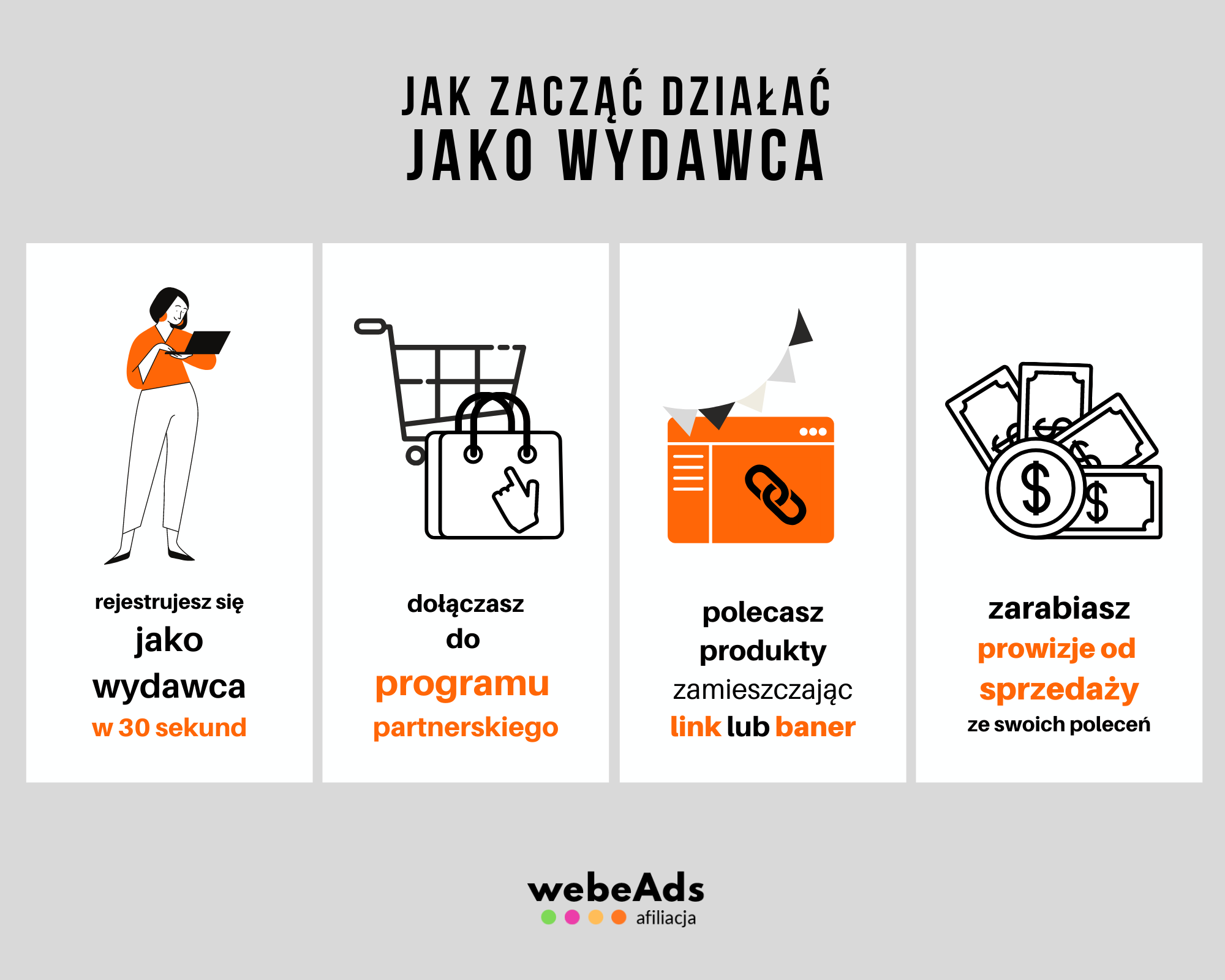
Before this happens, the publisher must register in the affiliate network as a PUBLISHER. After successful registration, the publisher gains access to the database of AFFILIATE PROGRAMS available in webePartners. After joining a selected program, the publisher can start recommending products offered in the ADVERTISER’S online store. The database of products available for recommendation in the webePartners network already includes over 3 million products! That is why every publisher will certainly find products that match the nature of their activity.
Several or even a dozen years ago, only a blog owner or someone running another type of website could be a publisher. Today, having your own website is no longer necessary if you want to earn money through affiliate marketing. In the era of social media, earning from recommendations only requires an account on popular platforms such as Facebook, Instagram, YouTube, Snapchat, or Pinterest. But note, even having a social media account is not essential for affiliate cooperation. A publisher can share links to recommended products, for example via email or any other online communicator.
As you can see, virtually any internet user who operates online, even on a very small scale, can become an affiliate publisher.

Simply register in an affiliate network as a PUBLISHER, and you’re done!
An affiliate network does not set any requirements regarding reach or number of followers. After registering, the publisher can immediately start promotional activities by joining an unlimited number of affiliate programs, but they can also calmly test and analyze the tools available on the platform: affiliate links, product widgets, discount codes, and XML files.
The most commonly used and simplest affiliate tool is an affiliate link. How does it differ from a regular link? It is a unique URL to any page on the advertiser’s website with the publisher’s unique encrypted ID embedded in it. Thanks to this, the affiliate network can track:
Publishers’ affiliate earnings are difficult to estimate. A lot depends on the publisher’s creativity and the trust they have built within their audience. The better the publisher matches recommended products to the expectations of their followers, the greater the chance of significant success in affiliate marketing. That is why webePartners cooperates with a huge number of online stores, offering over 3 million products, so every publisher is sure to find something suitable. The list of available affiliate programs, along with a description of the product range, can be found HERE.
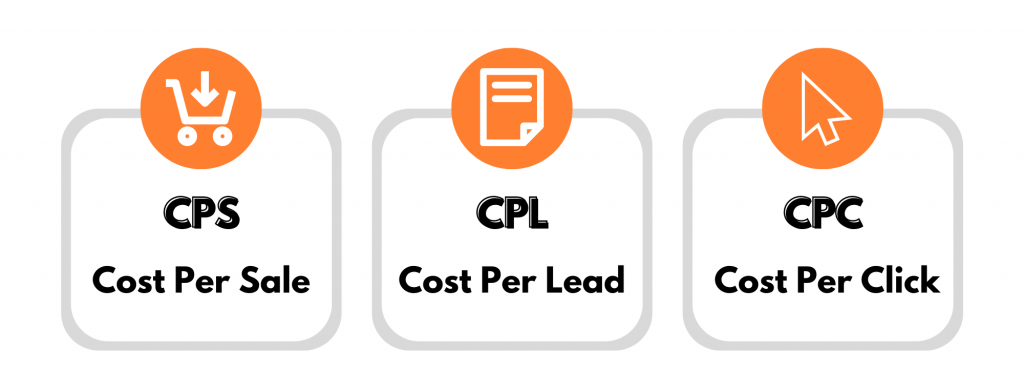
Affiliate marketing is based on three main compensation models: CPS, CPL, and CPC.
The main advantage of affiliate marketing is the performance-based billing model. In affiliate cooperation in the e-commerce industry, advertisers are online stores, and their basic billing model is Cost Per Sale, i.e. a sales commission model.
Cost Per Sale, CPS (sales commission) – the publisher receives a percentage commission for effectively recommending a product, the amount of which was previously set by the advertiser in the terms of the affiliate program. This model is most commonly used in the e-commerce industry.
Cost Per Lead, CPL (fixed rate for delivering an action) – the publisher receives a fixed fee for completing a specific action, such as signing up for a newsletter, downloading an e-book, or filling out a form. The CPL model is mainly used by companies offering financial services, training, or insurance.
Cost Per Click, CPC (fixed rate for each click) – the publisher receives a fixed fee for each unique click on a link or banner.
The first step is free registration in our affiliate network. During registration, you will be given access to the terms and conditions, which you confirm, and you do not need to sign anything (if you are of legal age). The next step is simply joining selected affiliate programs and recommending products for commission!
*For minors, registration in the network itself does not cause any problems. However, the payout of earned funds is made on the basis of a bill or invoice, and minors are not yet legally allowed to issue these independently. Therefore, the solution in this situation is for the bill/invoice to be issued by a parent or legal guardian. They provide their details and bank account number to which the due remuneration will be transferred.
Absolutely not! It is up to the publisher how much time and work they devote to recommending selected programs and products. Registration and joining an affiliate program do not impose any obligations on the publisher. Affiliate marketing is voluntary and independent cooperation, so the publisher decides when to start their activities.
When generating an affiliate link or widget, or downloading a banner, the publisher is automatically assigned a unique ID in the affiliate system. Thanks to this, the affiliate system can track traffic and transactions generated from a given affiliate tool. If someone clicks on the publisher’s affiliate link, the affiliate network’s tracking system immediately records it and calculates the appropriate commission if a sale is made.
Many customers visit a store through a publisher’s referral but do not decide to make a purchase at that moment. They often return with a purchase decision after a few days or even weeks. The solution to this situation is cookies. Cookies are files that are created and stored in the user’s web browser after clicking an affiliate link containing the publisher’s unique ID. Thanks to the affiliate network’s tracking system, this information is stored for at least 30 days. This means that if a customer who clicked a given publisher’s affiliate link makes any purchase within this period, the commission will be attributed to that publisher.
It does not make much difference. The advanced sales tracking system of our affiliate network will count the commission even if the purchase process is spread across multiple devices.
Absolutely! Publishers can save part of the amount this way, which they will get back as commission.
Cooperation with an advertiser is possible both through an affiliate network and directly with the advertiser. Many online stores offer their affiliate programs directly on their websites. The rules of cooperation are the same in both cases. If you’re now asking yourself: why is it worth joining an affiliate network then? Here are the main reasons:
Detailed activity statistics are available immediately after logging in to the publisher panel. They are updated in real time and show you:
The publisher can also check which advertising creatives generate the highest engagement and, as a result, the most commission. Any questions regarding these statistics can be discussed with an affiliate manager in the affiliate network.
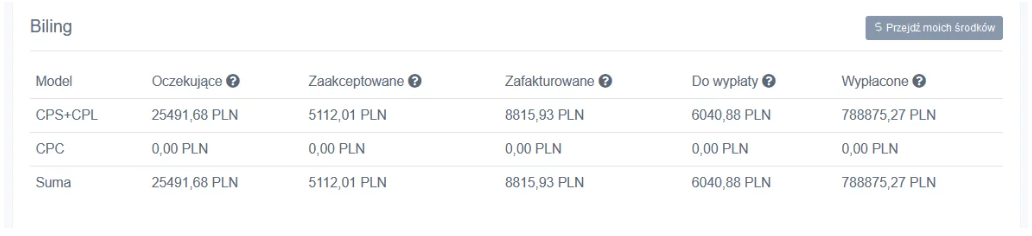
A publisher logs into their account in the affiliate network and sees that several transactions have been made through their referrals and commissions have been granted. But… if these orders are not completed—meaning they are not paid for by the customer, are not collected, or are returned—then unfortunately the commission may be rejected. According to the Cost Per Sale billing model, the advertiser has every right to do so. If the relationship between the publisher and the advertiser is strong, the advertiser may, as a gesture of goodwill, approve the commission even for an uncompleted order to support continued, fruitful cooperation.
Nothing could be easier 🙂 The minimum payout amount is PLN 100. If the publisher is withdrawing commissions for the first time, they need to contact us for a one-time payout activation. Each subsequent withdrawal can be made independently by clicking the Withdraw option.
No, they do not. The publisher can choose between two settlement options: issuing an invoice, which applies to publishers who run a business, or issuing a bill. The second option is intended for publishers who do not run a business. They can easily generate a bill in our system, and on this basis webePartners will pay out the earned commissions.
There are two ways for a publisher to settle affiliate income if they do not run a business.
The fact of starting cooperation, as well as receiving the first commissions, does not have to be reported to the tax office. However, once a year, the publisher is required to settle all their income. The publisher pays tax (the publisher, not the affiliate network) on their income if it exceeds the tax-free amount during the year.
In 2022, the tax-free amount is PLN 30,000.
When will the publisher not pay income tax?
If in 2022 the publisher earned PLN 30,000 from affiliate marketing and had no other income during that year, meaning they did not work or perform any other paid services. By the end of April 2023, the publisher files PIT-36 or PIT-37 with the tax office and declares income from “rental of advertising space” in the amount of PLN 30,000.
When will the publisher pay income tax?
The publisher will have to pay income tax if:
Example:
The publisher earned PLN 32,000 from affiliate marketing and had no other income during 2022. Based on this, they will have to pay 18% tax on the income amount reduced by the tax-free amount, i.e. 18% of PLN 2,000, which equals PLN 360.
The publisher can settle affiliate income as rental of advertising space. This type of income can be settled as a lump sum. If the publisher chooses this option, they must report this fact to the tax office – no later than by the 20th day of the month following the month in which they earned their first income from this source. Then, each month, the publisher will pay 8.5% tax on their affiliate income. If their affiliate income exceeds PLN 100,000, the tax rate increases to 12.5% on the surplus above this amount.
To obtain detailed information, it is worth contacting the local tax office.
Now that we have explained how it all works, you can confidently start your affiliate marketing adventure. As a publisher, you risk nothing and are not obliged to do anything. As an advertiser, you also do not have to worry about wasting your advertising budget. You increase sales in your online store, and the publisher earns commissions on sales generated through their referrals. It is a win-win situation, and that is exactly why affiliate marketing is worth choosing!
POSTS THAT MAY INTEREST YOU:
How does an affiliate network work?
Cost Per Sale – the payment model that will dominate the e-commerce market
Affiliate marketing in e-commerce – basics of cooperation with publishers