
The art of storytelling, or telling stories, is not only about appealing to emotions, but also to beliefs and perspectives. When used effectively in business, storytelling can bring excellent results, but not without risk. Want to use storytelling? Check whether it is worth taking on this challenge!
What is storytelling? It is the art of telling stories, which has long been used in branding strategy. It involves creating narratives around products, services, or entire companies that are intended to influence the emotions of the audience. It is a strategy aimed at building a brand image and strengthening bonds with customers by inspiring them to take specific actions. A good story, or storytelling, is an effective communication tool. It makes it possible to convey a company’s values and beliefs in a way that is more appealing to the audience by using accessible language. A good story prompts action.
There are many ways to use storytelling in marketing:
Thanks to the variety of formats, storytelling can be tailored to the needs and preferences of both the company and its customers. It is an extremely flexible promotional tool.
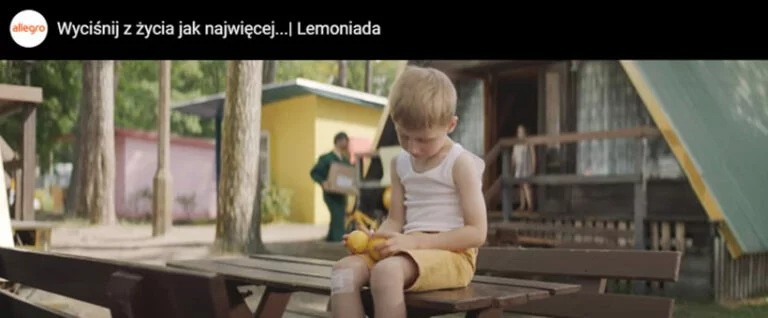
Allegro is widely regarded as a leader in evoking emotions through video advertising on the Polish market. Their campaigns — from the story of a grandfather learning English, to a boy selling lemonade, or a mother looking for a costume for her daughter’s school costume party — are excellent examples of successful storytelling and well-thought-out messaging. These ads are able to move even the most skeptical viewers, leaving a lasting emotional impact. Thanks to such efforts, Allegro has managed to win the sympathy of even its most doubtful audiences, at least for a moment.
This question concerns many people, but it is worth remembering that storytelling allows you to adapt to the needs of any entity. There are no unquestionable rules here that cannot be broken. Quite the opposite! When using storytelling in promotional communication, flexibility and adapting to audience expectations are key.
A good story is one that not only conveys a message, but also draws the audience in with its plot. As a result, it becomes easier to remember and understand content that, in a drier and more factual form, might have gone unnoticed.
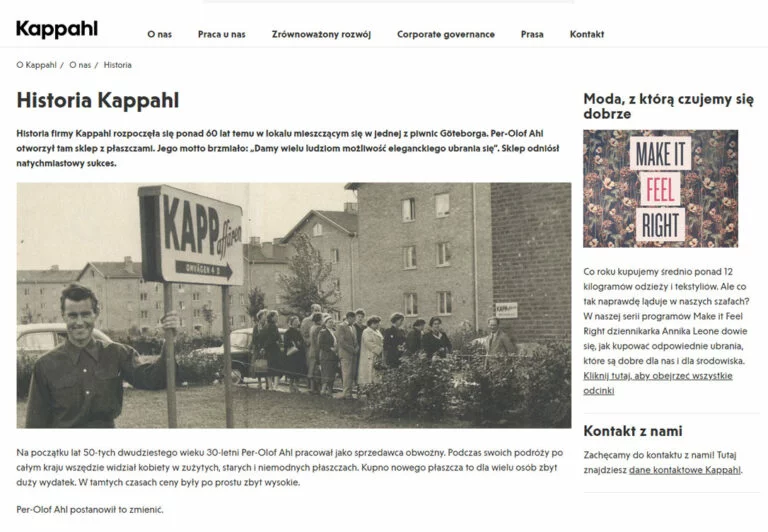
Using storytelling in a brand’s history, as Kappahl has done, is an excellent branding strategy. Instead of dryly listing dates and events, the company tells its story as if a grandfather were telling it to his grandchildren.
Advertisements, podcasts, or texts that stir emotions attract attention and are often repeated. For example, Haribo’s brand stories, showing adults behaving like children, evoke joy and teach a childlike approach to the world while promoting the product at the same time. People like to get to know the behind-the-scenes aspects of a company’s operations, which is why it is worth showing the processes and the people involved in its growth. This makes the message more authentic and convincing.

The Kubota brand has made excellent use of storytelling by sharing its beginnings. On its website, it presented the creation process with original photos, highlighting the authenticity of the story. This narrative shows the history of the products, how the company overcame difficulties, and how it developed over the years. In the 1990s, especially when it came to transcontinental transport, operations were not as efficient as they are today. Kubota’s brand storytelling presents the true beginnings of a large company, showing it behind the scenes and revealing what interests people most — the authenticity of the story. Thanks to this storytelling, we get to know a part of the lives of Wiesław and Dorota Kubota, as well as the following generations who contributed to the development of this business.
Click here and sign up!
Paweł Tkaczyk, a storytelling expert, believes that “the customer is the hero, and your product only supports them.”
Piotr Bucki, in turn, in his book Let’s Talk About Communication, defines a hero as a person who has awareness, motivation, and something that irritates or unsettles them in the world around them. The hero exists within a specific context and has a defined set of characteristics. The hero’s motivation, which drives them to act, is also important. It is difficult to define a hero unambiguously, but there are elements of effective storytelling that allow audiences to identify with them, feel sympathy for them, or, on the contrary, think of them negatively.

This is a great example of successful storytelling. A good story about the company’s origins is presented in an unconventional, memorable, and easy-to-understand way. This is a huge advantage, especially when passing by one of the brand’s chocolate lounges. Storytelling is a key promotional strategy for the E.Wedel brand, which can be seen both in television ads and on their YouTube channel, where many spots combine the company’s beginnings with modern times, highlighting the enduring love for Wedel chocolates for nearly 200 years.
An advertisement that lasts only two minutes is a true masterpiece of storytelling. It presents the story of a grandfather who wants to get to know his granddaughter, but the only language they can communicate in is English. He therefore decides to devote himself entirely to learning a language he did not know before. In the background, various products available on Allegro can be seen helping him achieve his goal. In the end, the grandfather visits his son’s home, where he meets his granddaughter and is finally able to communicate with her.
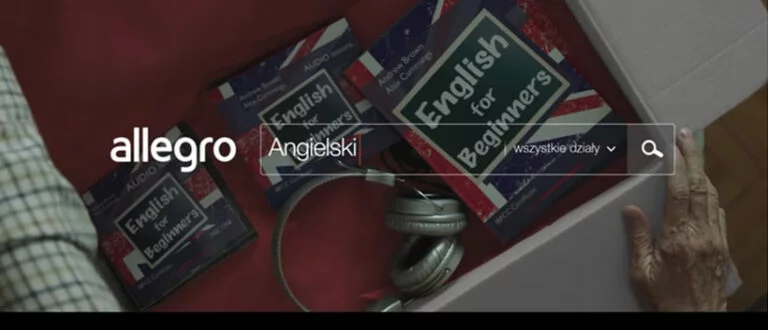
This advertisement is a real treat for the emotions. The story builds connections, moves, surprises, and entertains, while also containing humorous elements. All the key elements of storytelling are present:
This advertisement was awarded a Bronze Lion at the Cannes Lions Festival 2017 in the Entertainment category, which confirms its uniqueness and value as a source of inspiration! So storytelling really works!

Pedigree’s ad about dog adoption is one of the brand’s newest works and deserves recognition. Exceptionally successful in terms of storytelling, it delivers a great deal of emotion and features an engaging story, with a dog as the main character and a charming narrator — a little boy. This campaign encourages the adoption of dogs from shelters while also promoting the Pedigree Dentastix product. However, the product itself appears only at the end and does not play a key role in the overall narrative, which fits perfectly with the idea that the customer is the hero, and the product merely supports them.
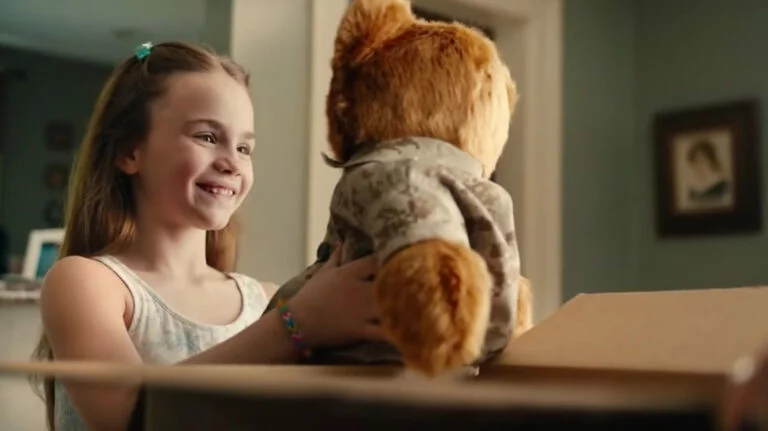
This is another example of a successful story. The batteries are placed inside a talking teddy bear that a girl receives as a gift from her father. Thanks to the batteries, the teddy bear speaks in the father’s voice. The turning point in the ad is crucial, as it releases the tension built in the viewer. In effective storytelling for e-commerce, it is also important to include a call to action at the end, encouraging people to explore the offer or product, since storytelling is meant to promote the brand.
Kurt Vonnegut proposed the theory of story shapes, which is an important tool in the process of creating narratives. According to him, story shapes can be presented on a graph, where the vertical axis represents emotions (from euphoria to despair), and the horizontal axis represents the timeline of the story. What storytelling patterns did he identify?
These story shapes are a useful tool for creating narratives and building a communication strategy. They are especially helpful at the beginning of work in narrative marketing, when a creator does not yet have experience in shaping a new reality.

He is widely recognized as an expert in the field of storytelling. His in-depth knowledge and practical experience have earned him strong recognition in the marketing world. Tkaczyk collaborates with renowned brands such as Sony, HBO, Orange, and Brand24, sharing his skills and expertise in using storytelling in business communication. His website is a rich source of information on storytelling, featuring articles on various aspects of narrative marketing as well as current industry trends. Tkaczyk not only shares theoretical knowledge but also offers practical tips on creating effective narratives for brands and companies.

A well-known ghostwriter, speaker, and author of business books, he specializes in business psychology as well as the art of storytelling, public speaking, and creativity. He co-runs the educational website edisonteam.pl, where you can find his blog with articles on various aspects of narrative marketing. In addition, he offers training courses that may be valuable for people interested in gaining knowledge related to working with industry giants such as Philips, Skanska, Coca-Cola, Warta, or Generali. Before deciding to take part in his training courses, it is worth becoming familiar with his publications and blog articles, as well as reading his book titled Storytelling.
She is an outstanding figure in the field of narrative marketing and the creator of the Fabryka Opowieści platform. It is a place that combines a blog, an educational service, and a store, aimed at everyone interested in the art of storytelling. On her storytelling blog, you will find valuable content that can help you create your own narratives. You can also explore posts written by the best students of the Master School of Business Storytelling. Dr. Monika Górska also runs her own YouTube channel, which is a rich source of expert knowledge and case studies. Her platform is not only a place for learning, but also an inspiring space for all storytelling enthusiasts.
However, storytelling requires caution in order to avoid negative consequences. It is important to avoid building a strategy around controversial topics that evoke negative emotions in the story being told, as this may lead to the alienation of most of the audience. An example is the controversial H&M campaign, which faced criticism for stereotypical messaging. It is also important to avoid a lack of clear story structure and an overly complicated message, which may confuse the audience.
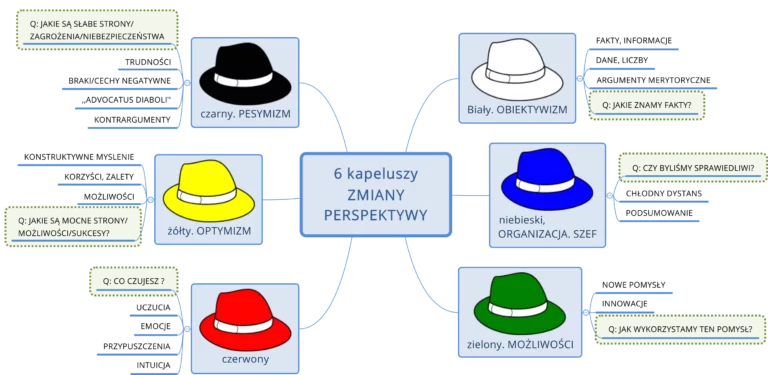
The six thinking hats method is one of the tools often used when creating the main character in storytelling.
It was developed by Maltese psychologist Edward de Bono based on the concept of lateral thinking. It involves analyzing problems from different perspectives, which helps avoid fixed patterns of thinking. In this method, participants in a discussion take on roles associated with different “hats,” which symbolize various mindsets such as emotions, objectivity, pessimism, optimism, possibilities, and organization. This approach allows for generating diverse perspectives and scenarios, which can be very useful in shaping characters and developing the plot in storytelling.
The six thinking hats method is an effective storytelling tool. It can be used when creating the main character in storytelling. Presenting different perspectives through colored “hats” allows for generating diverse scenarios and engaging stories. This influences how the audience perceives an advertisement or a story.
An example of using this method is the advertisement for Lancôme Idôle perfume. The heroine, wearing a green hat, discovers her strength and courage thanks to the fragrance. When analyzing other possible hat colors, such as red, white, yellow, black, blue, and blue, it becomes clear how different perspectives can influence the content and message of the advertisement. For example, a heroine in a red hat could show emotions and hope for a better tomorrow, while a white hat would bring a more pragmatic approach to the product being presented.
Thanks to the six thinking hats method, advertising creators can experiment with different scenarios and emotions. This can make their story more accessible and engaging for the audience. As a result, such advertisements can inspire viewers and encourage them to take positive actions or make purchasing decisions. The hat method is one of many tools for creating a hero in storytelling, although it is one of the most popular. An alternative could be, for example, organizing a brainstorming session within the company or gathering customer stories about what associations people have with a product, service, or brand. This makes it possible to determine what kind of storytelling hero should be created — whether it is a young boy, a confident woman, an elderly lady, or a busy father of three children.
Start earning with WebeAds
What matters is a narrative that humanizes the brand, but does not have to be childish. A story builds connections, so the story itself or product stories must be easy to understand, avoiding excessive use of keywords and adjectives. It is also important to choose the right publishing channels so that the message reaches the appropriate audience. Do not limit yourself to one publication format — experiment with different communication channels.
See also: