What is CPC? Understanding and Using Cost Per Click in Affiliate Marketing
15 May 2024
As you already know, an effective online advertising campaign can significantly impact the success of your business. Among the various advertising methods, Cost Per Click (CPC) is one of the most measurable and flexible pricing models. But you may be wondering: what exactly is CPC? Thanks to this article, you will understand how to effectively use the CPC model to maximize your return on investment (ROI) and optimize your advertising campaigns.
What does CPC mean? Also known as Cost Per Click, it is a pricing model used in online advertising where payment is generated for each click on an ad link. CPC focuses on the user’s direct interaction with the advertisement.
Cost Per Click – what is the cost and how to calculate it?
The cost per click (Cost Per Click) can vary significantly depending on many factors, including the industry, competition, the advertising platform used, and the target audience. The cost per click is calculated by dividing the total cost of all clicks by the number of clicks. Simple, right? But behind this simplicity lies a whole strategy and analysis.
How to calculate average CPC?
It is relatively simple and requires dividing the total cost spent on advertising by the number of clicks the ad generates. To calculate the average CPC, follow these steps:
Add up the total cost spent on clicks within a given campaign. For example, if you spent $500 on your ads.
Note the number of clicks those ads generated. Let’s assume it was 250 clicks.
Divide the total cost by the number of clicks to get the average CPC. In this example, you would divide $500 by 250 clicks.
As a result, you will get the average cost of a single click. In the example above, it is $2 per click. This means that, on average, you pay $2 for each click on your ad. This information is useful for assessing how effectively you are spending your advertising budget and whether the cost per click is appropriate for the value you gain from each user visiting your website. Average CPC is a key metric for monitoring the effectiveness and profitability of advertising campaigns, especially when you manage a marketing budget and want to optimize your spending in relation to the traffic generated.
What is CPC?
What are the advantages and disadvantages of the CPC model?
Advantages of using CPC
The CPC (Cost Per Click) model is a popular choice in online advertising, offering both specific benefits and some challenges. Here is a detailed overview of the advantages and disadvantages of this pricing model.
Payment for actual actions. In the CPC model, you only pay when a user actually clicks on your ad. This minimizes the risk of spending money on viewers who see the ad but are not interested enough to take further action.
Ease of performance measurement. CPC makes it easy to measure the effectiveness of individual ads and campaigns, which helps optimize marketing strategies and allocate the budget to the most effective activities.
Budgeting and cost control. The ability to set maximum bids per click helps with precise budget planning and avoiding unexpected expenses.
Quick response and optimization. Feedback data is available almost immediately after the campaign is launched, allowing for a quick response and real-time ad optimization.
Increased user engagement. Advertisers can direct traffic to specific landing pages, which increases the chance of user engagement and completing specific actions, such as purchases, newsletter sign-ups, or downloading materials.
Sign up for webeAds and get access to exclusive tools to boost your sales! Click here and discover more I WANT TO JOIN
Disadvantages of CPC
Risk of high costs. In competitive industries, CPC rates can be very high, which can significantly increase campaign costs, especially if clicks do not translate into adequate conversions.
Low-quality clicks. Not all clicks are equally valuable. Some may come from users who have no real interest in the product or service, or even from fraudulent traffic generated by bots.
Need for continuous optimization. The CPC model requires constant monitoring and optimization to ensure cost efficiency and avoid wasting budget on ineffective clicks.
Short-term focus. Focusing on clicks may overshadow long-term goals, such as building brand awareness or customer loyalty, which are harder to measure and achieve within the CPC model.
Complexity in campaign management. Effectively managing a CPC campaign requires experience and an understanding of many factors, such as keyword selection, ad design, and landing page optimization.
Comparison of CPC with Other Pricing Models
Although CPC is a popular choice among advertisers, it is worth understanding how it compares to other models.
The most popular models:
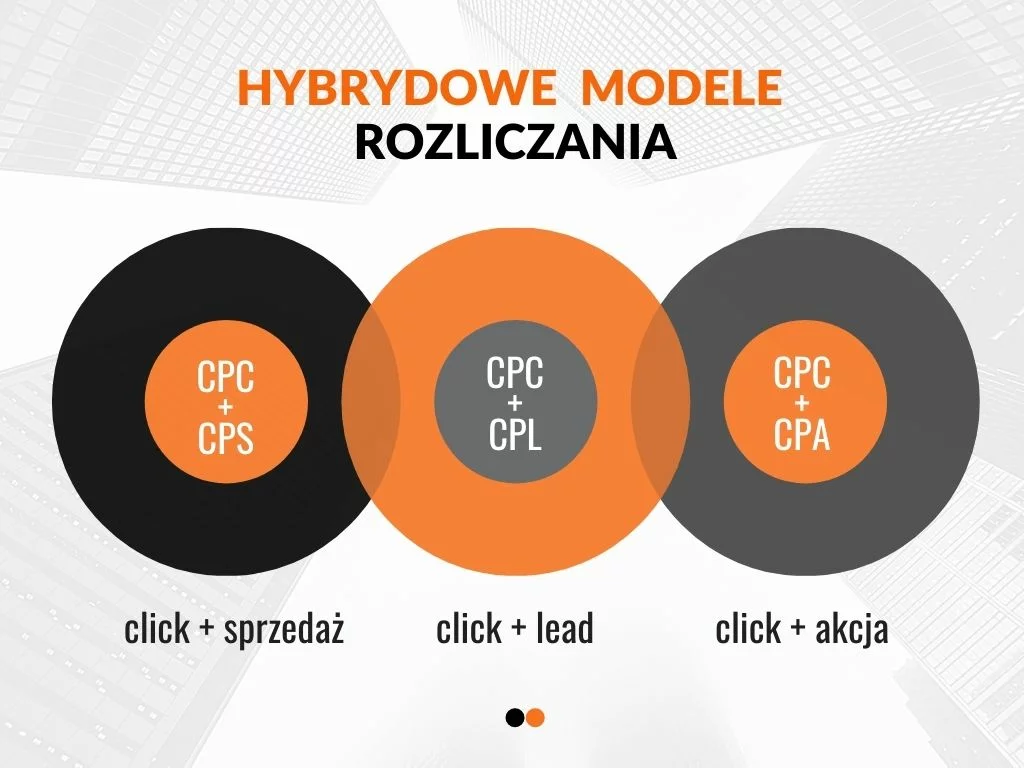
CPC CPM (Cost Per Mille)
You pay for one thousand ad impressions, regardless of user interaction.
CPC CPV (Cost Per View)
CPV is mainly used in video advertising campaigns, such as those on platforms like YouTube or Facebook, where payment is made when an ad is viewed for a sufficiently long time (e.g. 30 seconds).
CPL is used in campaigns that aim to generate specific leads, such as filling out a form, signing up for a newsletter, or expressing interest in a product.
CPC CPA (Cost Per Acquisition)
Here, you pay for a specific action, such as a purchase or registration.
CPC CPS (Cost Per Sale)
It involves the advertiser paying a commission for each sale that is directly generated by the advertisement. It is a form of compensation for intermediary or sales services, and the amount of the commission usually depends on the value of the transaction or sale.
The cost per click (CPC) in Google Ads depends on several key factors. Industry competitiveness is one of the main determinants—intense competition for popular keywords leads to higher CPC rates, especially in industries such as finance or law. Quality Score, which reflects the quality of the ad, also affects CPC; a higher score means better alignment between the ad, keywords, and landing page, which can lower costs. Location and ad scheduling also have an impact, with higher rates during peak hours or in larger cities. Ad format and bidding strategies also influence CPC, with varying costs depending on the type of ad and selected bidding settings. Managing these elements allows for cost optimization and improved campaign performance.
Why is CPC important in affiliate marketing?
Direct measurability of ad performance. CPC allows advertisers to precisely track which ads generate clicks. This is crucial in affiliate marketing, where the effectiveness of every dollar spent matters. Thanks to the CPC model, affiliates and advertisers can quickly identify which campaign elements perform best and adjust strategies in real time to maximize return on investment.
Cost control and budgeting. In the CPC model, you only pay for clicks, which means advertisers do not waste money on viewers who see the ad but take no action. This allows for more efficient use of the advertising budget by focusing spending on traffic that actually leads to interaction.
Real-time campaign optimization. The CPC model enables dynamic campaign adjustments. Affiliates can test different keywords, ad creatives, and landing page goals to see which elements deliver the best results. The ability to respond quickly and flexibly to campaign data is crucial in the fast-changing world of online marketing.
Improved targeting effectiveness. Cost Per Click allows affiliates to focus on the most specific and interested audience segments. Through precise targeting (e.g. based on demographics, interests, or location), ads can be shown to users who are most likely to click and take further action, significantly increasing campaign effectiveness.
Scalability of affiliate campaigns. With Cost Per Click, affiliates can more easily scale their efforts because it is clear which aspects of the campaign perform well. After optimizing and testing different approaches, they can increase spending on the most profitable strategies, improving overall effectiveness and reach.
Motivation to create high-quality content. Since Cost Per Click is based on clicks, affiliates are more motivated to create engaging and attention-grabbing ads that effectively encourage users to click. This leads to higher-quality content across the web, benefiting both users and brands. In affiliate marketing, where ROI and conversion are key, the Cost Per Click model offers not only cost efficiency but also strategic flexibility, making it one of the most preferred pricing models in this field.
Do you want to start making money online? Sign up for webeAds and get access to exclusive tools to boost your sales! Click here and discover more! TRY IT FOR FREE!
WebeAds Platform as an Affiliate Marketing Tool
The WebeAds platform, a popular choice among online marketers, offers broad opportunities for campaigns based on the Cost Per Click model. By using WebeAds, advertisers and affiliates can not only effectively reach their target audiences, but also take advantage of advanced tools to optimize their advertising campaigns. Start your journey with WebeAds today to unlock the full potential of affiliate marketing and drive your business growth even more effectively!
E-commerce is growing rapidly. How can you keep up with the competition? Online commerce (e-commerce) has been breaking sales records for several years. The pandemic only accelerated this process, permanently changing...
One million impressions, thousands of likes, hundreds of comments, and a growing number of followers. At first glance, it is hard to imagine better results from a marketing campaign. But what if those impressive stati...
An online store may have several thousand products, each with its own name, price, description, images, category, variants, and availability information. This data changes every day – one product goes on sale, a...
Online marketing today is not about choosing one channel and simply increasing the budget within it. A customer may first encounter a brand on Google, later see its product on Instagram, read an expert article, watch ...
webeAds enables advertisers to cooperate with publishers in affiliate models of Cost Per Sale and Cost Per Lead cooperation. It is a platform with advanced technological background for launching, operating and cooperating in affiliate programs. Advertisers receive a number of tools enabling cooperation with publishers, and publishers receive affiliate tools supporting earning money by recommending products online.
The company is registered in the Register of Entrepreneurs kept by the District Court for Wrocław – Śródmieście in Wrocław, 6th Commercial Division of the National Court Register, KRS number 0000630899, NIP 8982223087, Regon 365121198 Share capital PLN 500,000