
In the world of e-commerce, where competition is growing day by day, the key to success is the precise selection of advertising channels and understanding how they work. This article is a complete guide for advertisers who want not only to learn the names and formats of ads, but above all to understand how to optimize campaigns to achieve the best return on investment. In this chapter, we explain step by step what you need to know to ensure your ads deliver real results.
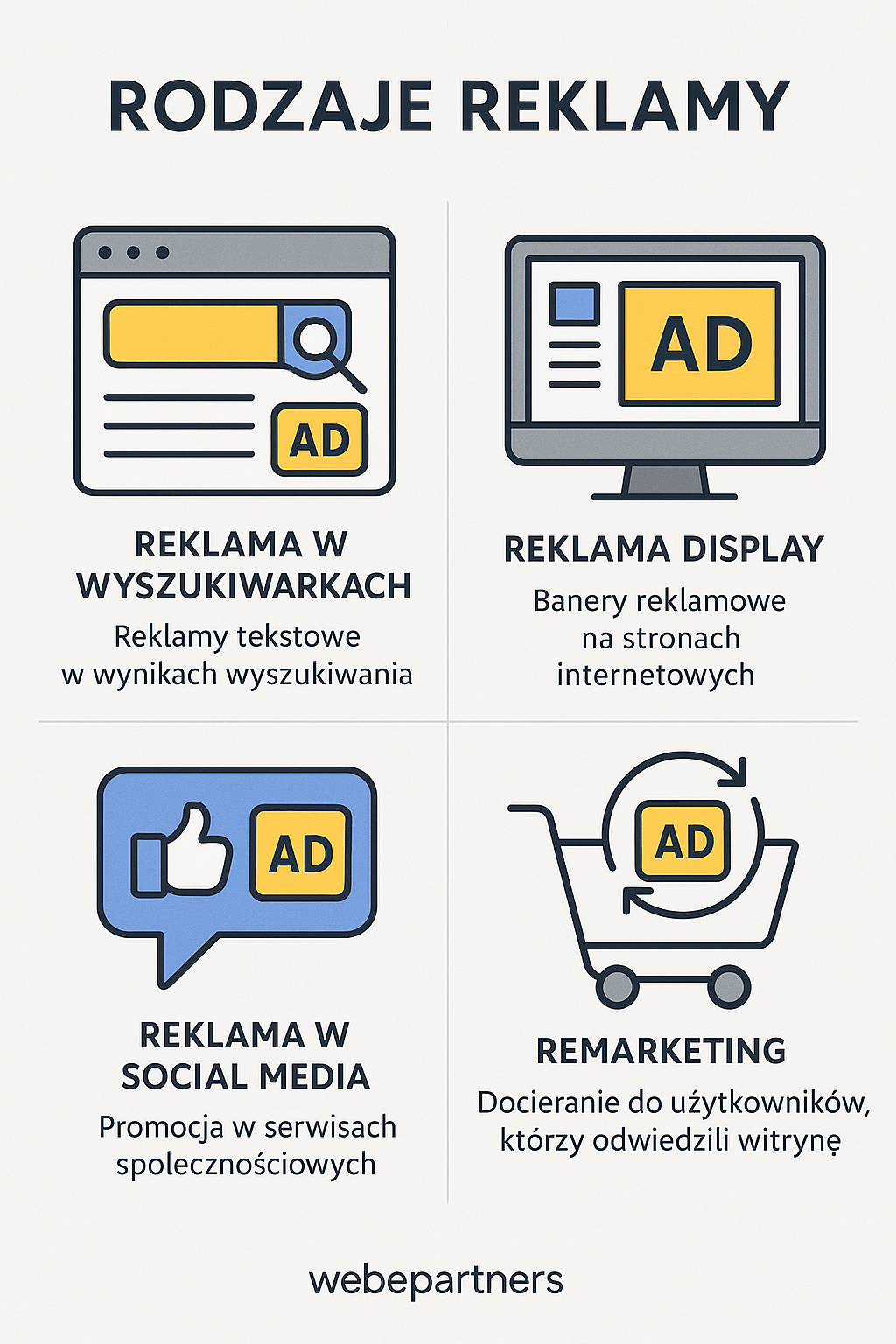
Search Ads, or search engine advertising, are paid text results displayed above and below organic search results. The platforms used by advertisers include, among others, Google Ads.
When a user enters a query into a search engine, ads are filtered based on a set of keywords previously defined by the advertiser. Then, a real-time auction takes place — the higher the CPC (cost-per-click) bid and the higher the ad quality (Quality Score), the greater the chance of achieving a higher position in the results. After a click, the user is redirected to a landing page, and the advertiser is charged for that click.
Advertisers have access to tools that automate optimization: smart bidding strategies or dynamic headlines. Thanks to them, ads adapt in real time to the user’s intent.
Automate your affiliate program – contact us!
Display Ads, or display advertising, are static and video banners shown on websites within advertising networks (e.g. Google Display Network). They help build a strong visual presence for a brand.
Display ads reach audiences based on contextual targeting (website content), demographic targeting (age, gender), behavioral targeting (browsing history), and remarketing. Systems automatically determine on which websites and at what moment the banner will appear.
Display Ads are the foundation of branding activities. Even if a user does not click immediately, repeated exposure to your logo and brand message ensures that at the critical moment of purchase, your offer is the first that comes to mind.
Social Media Ads, or social media advertising, include paid posts, carousels, stories, and videos on platforms such as Facebook, Instagram, TikTok, or LinkedIn.
In social media, the key is authenticity and matching the format to the platform. On Instagram, lifestyle photos and short videos work great; on LinkedIn, sponsored thought-leadership articles perform well; and on TikTok, creative short clips are the most effective.

Social media ads are not just about sales, but also about building relationships. Respond to comments, use tools such as polls and quizzes, and your brand will gain not only customers, but also loyal ambassadors.
Do you run an online store and wonder how to combine the power of influencers with a pay-only-for-results model? Affiliate marketing is exactly that — you do not spend large amounts blindly, but instead pay a commission for each transaction or lead generated by the creator. Instead of agreeing on a fixed fee with an influencer for a post, you offer them a percentage of the sales or a set amount for acquiring a customer (CPS — cost per sale, or CPL — cost per lead). This way, both sides are motivated: they promote your store as effectively as possible, and you only pay when you actually earn.
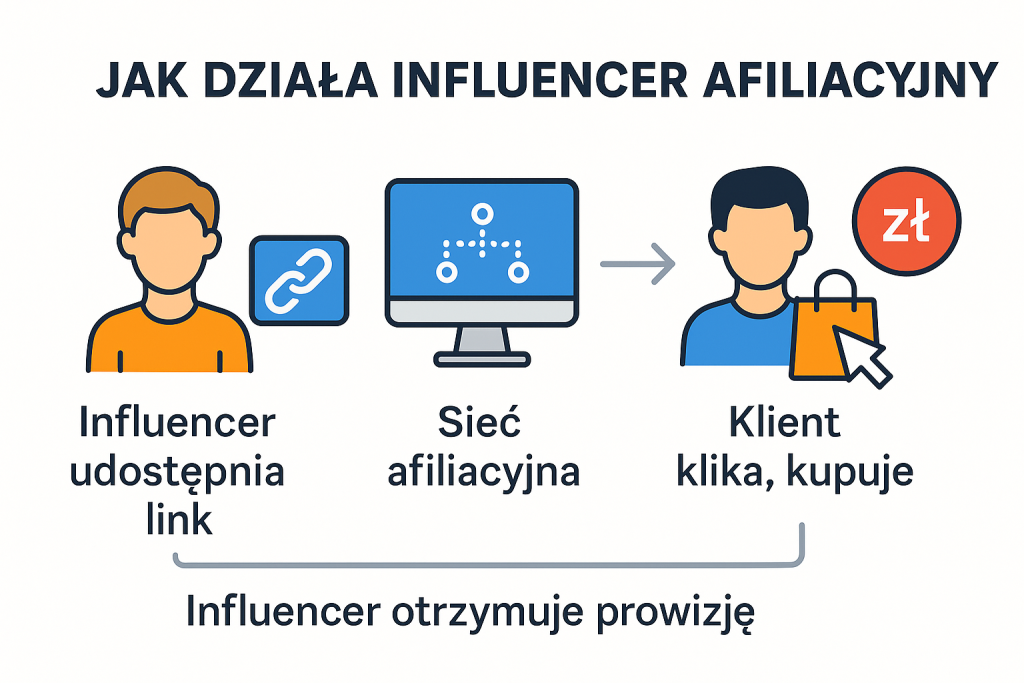
If you care about trust and authenticity, micro- and nano-influencers are a perfect fit. They have smaller but highly engaged communities, and a performance-based commission (e.g. 10% per sale) motivates them to actively promote your products. Imagine sending a product as part of a barter deal while also offering a percentage of each sale — the creator does an unboxing on Instagram, tests the product in a series of stories, and adds an affiliate link in their bio, earning a commission from it. This model allows you to test hundreds of micro-creators with almost no budget risk.
The key lies in transparent reporting. An affiliate platform shows which links and codes generated sales, what the average order value was, and how much commission was paid out. This way, you know which influencers perform best and can renegotiate rates or expand the partnership. The main KPIs are the number of leads, order value (AOV), and ROAS (Return On Ad Spend) for affiliate programs.
Affiliate marketing is a “pay for performance” model that scales very well with both large influencers and micro- or nano-influencers. You stay in control of your spending, do not pay upfront, and creators, facing zero marketing risk, are more willing to engage their communities. Combined with a clear commission system and ready-to-use performance tracking tools, you get an efficient sales channel that grows along with influencer engagement.
Turn affiliate marketing into a growth engine! Discover tools that scale.
When you are already investing in ads and influencers, remember the most important thing: brand safety. You certainly do not want your campaign to appear next to controversial content or companies spreading hate. That is why, from the very beginning, you should create your own lists: whitelists (the websites, apps, and channels where you definitely want to advertise) and blacklists (topics or placements you absolutely want to avoid). Work with DSP platforms and ad networks that have built-in verification tools.
Carry out a publisher audit every quarter and monitor viewability and fraud rate metrics. If you notice that some websites generate suspiciously low viewability (for example, ads are being displayed but are not actually seen by users), it is worth reacting quickly and adjusting the settings. And beyond that, it is always worth remembering contextual targeting: direct ads based on the website’s topic (sports, lifestyle, health), not only on demographics. This minimizes the risk of your brand appearing next to content that could harm its image.
Remarketing, also known as retargeting, is a strategy of reconnecting with website visitors who did not complete a conversion.
A user who has seen your offer but left without making a purchase often just needs a small “nudge.” The presence of your ad at subsequent points in their browsing journey reminds them of your store and increases the chance that they will return.
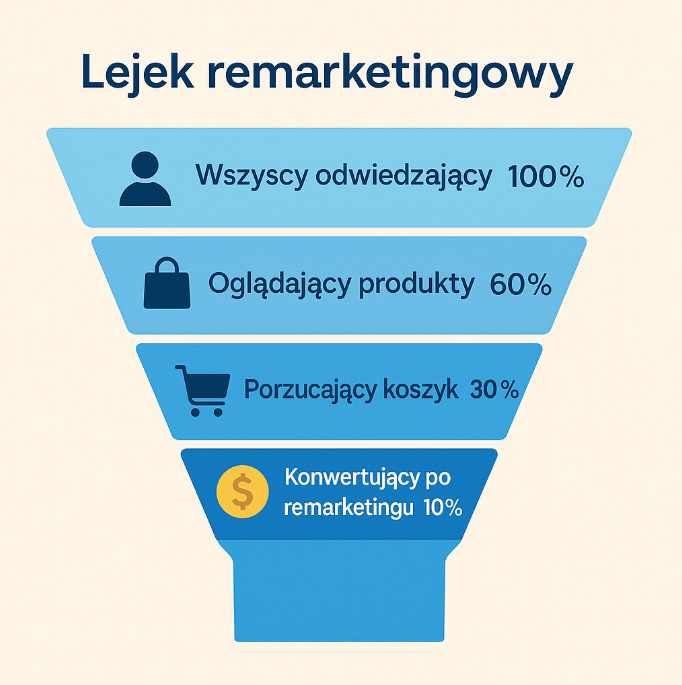
The graphic illustrates four key stages of reminding users about your offer.
All visitors (100%)
This includes everyone who visited your website — both new and returning visitors. At this stage, you collect data using a pixel or a remarketing tag.
Product viewers (60%)
Users who scrolled through a product page or clicked on an offer. It is worth preparing dynamic product ads for them, showcasing the specific SKUs they viewed.
Cart abandoners (30%)
People who added products to the cart but did not complete the transaction. For this group, use strong calls to action (“Complete your order”) and possible incentives (e.g. a discount code).
Converters after remarketing (10%)
Ultimately, around 10% of this group returns and makes a purchase thanks to the reminder. Here, frequency is key (frequency cap) — set a maximum of 3–5 ad impressions per person per day to avoid irritation.
Track metrics such as remarketing ROI, the increase in conversions from this group, and compare CAC (Customer Acquisition Cost) before and after implementing remarketing.
Affiliate marketing is a cooperation model in which you pay partners (affiliates) a commission for generated traffic or sales. Partners include bloggers, price comparison sites, influencers, and niche websites.
By integrating affiliate audiences with remarketing, you can re-engage users brought in by partners — increasing the chance of a sale and optimizing acquisition costs.
Contact us — we’ll help you build a system tailored to your needs and industry!
Each channel requires a different approach, but together they create a cohesive advertising ecosystem that maximizes reach, engagement, and sales. Implement the strategies described and monitor key performance indicators (KPIs) to continuously optimize your efforts and achieve even better results. Good luck with your campaigns!