
For many advertisers, affiliate marketing begins the moment a campaign is launched. From the perspective of an affiliate expert, that is already too late.
The most important decisions determining whether affiliate marketing will become a scalable sales channel are made before the first affiliate even sees the offer.
At WebeAds, affiliate marketing is not “just another channel,” but a sales project that needs to be planned, conceptually tested, and only then launched. If you are considering affiliate marketing, it is worth understanding what this kind of offer evaluation looks like step by step.
Want to check whether your offer would pass this kind of analysis?
Join the WebeAds network and submit your offer!
From the outside, affiliate marketing looks simple: you set a commission, publish the offer, and wait for sales. The problem is that affiliates do not promote everything. They choose offers that are predictable, scalable, and safe for their business.
An affiliate expert knows that launching a campaign without solid foundations harms all parties involved. The advertiser loses time and budget, affiliates become discouraged with the brand, and the network loses credibility. That is why at WebeAds some offers do not enter the network until they are properly refined.
If you care about affiliate marketing that makes sense in the long term, it is worth starting with a conversation with an affiliate expert, rather than publishing a program.
One of the first elements an affiliate expert analyzes is the actual margin, not the one resulting from the price list. In affiliate marketing, commission is not a one-time cost – it becomes part of the entire sales system.
That is why not only product prices are evaluated, but also logistics costs, discounts, returns, and sales seasonality. An affiliate expert looks at whether the commission will be profitable not only today, but also once the campaign is scaled.
If you are not sure whether your margin is ready for affiliate marketing, you can verify it with WebeAds even before launching the program. All you need to do is submit your offer for analysis.
From an affiliate expert’s perspective, a one-time sale is rarely a sufficient argument. What matters far more is how long the customer stays with the brand and how much value they generate over time.
Subscription models, SaaS, and products with high retention give affiliate marketing much more room to maneuver. They make it possible to design commissions in a way that keeps affiliates motivated while allowing the advertiser to maintain a healthy ROI.
Join the WebeAds network and talk to an affiliate expert before launching your campaign.
An affiliate expert always asks themselves one question: will the affiliate be able to easily explain the value of this offer to their audience? If the product or service requires lengthy explanations, a complicated process, or has unclear advantages, the campaign may struggle to scale.
Often, recommendations regarding communication, USP, or the landing page already appear at this stage. The goal is not to change the product, but to make affiliates’ work easier.
At WebeAds, many offers become more effective even before the campaign starts precisely thanks to such adjustments.
Experienced affiliates assess risk very carefully. They are interested not only in the commission rate, but also in how long they will wait for sales approval, how often leads are rejected, and whether the terms of cooperation are stable. An affiliate expert can anticipate which elements of an offer may raise concerns and eliminate them before the campaign launches. As a result, affiliates are more willing to engage in promotion, and the campaign grows faster.
If you want to attract valuable partners, joining the WebeAds network allows you to build an affiliate program based on clear principles.
An affiliate expert looks at technology a bit like the foundation of a building: if it is uneven, you can keep adding floors (more partners, higher volume), but everything will start to crack precisely when the campaign begins to grow.
If you want to avoid launching “in the dark,” click and join the WebeAds network — a technical evaluation of the offer before launching the campaign saves the most money.
If you want to avoid launching “in the dark,” click and join the WebeAds network.
In affiliate marketing, tracking is the currency of trust. An affiliate invests their work (traffic, content, budget), expecting that conversions will be counted fairly. If tracking is unstable or incorrectly configured, even the best offer has no chance of lasting long — because the best partners will simply walk away.
That is why an affiliate expert checks not only whether “something is being tracked,” but whether it is being tracked in the right way. In practice, they focus on questions such as:
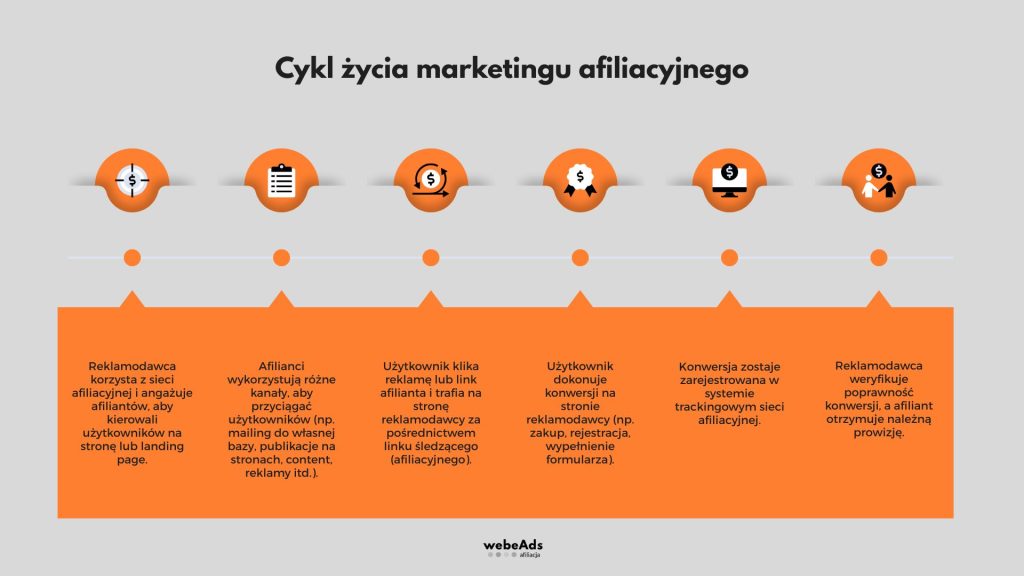
For the advertiser, the most important thing is that tracking errors almost always look like “weak affiliate performance,” while the real problem is attribution. An affiliate expert identifies this earlier.
The second classic problem is friction between affiliate marketing and other channels: Google Ads, Meta, SEO, CRM, marketplaces. The advertiser sees sales and thinks: “great,” and then the question arises: who is responsible for it, and am I not paying twice?
An affiliate expert evaluates whether:
This matters because advertisers often make one mistake: they set up affiliate marketing as “one big bucket” and only later realize that their program is dominated by closing partners, rather than demand-generating ones. An affiliate expert designs this in advance.
Advertisers often already have their own tools: GA4, CRM, an e-commerce system, remarketing tools, and sometimes a data warehouse. An affiliate expert does not try to replace them — they check whether affiliate marketing can be integrated in a way that:
In practice, it comes down to one simple thing: if the network report shows X and your systems show Y, a dispute starts within the organization. An affiliate expert does not allow that to happen — because in such a dispute, affiliate marketing always loses, even when it is right.
An often overlooked element: even with perfect tracking, affiliates still need “fuel” to work with. An affiliate expert assesses whether the advertiser has prepared:
This is crucial, because top affiliates think like entrepreneurs: if implementing an offer is difficult, they will choose another one. That is why an affiliate expert makes sure that joining the program is simple and profitable.
Do you want affiliates to be able to promote your offer quickly and effectively? Click and join the WebeAds network — we will help you prepare a program to a standard that works.
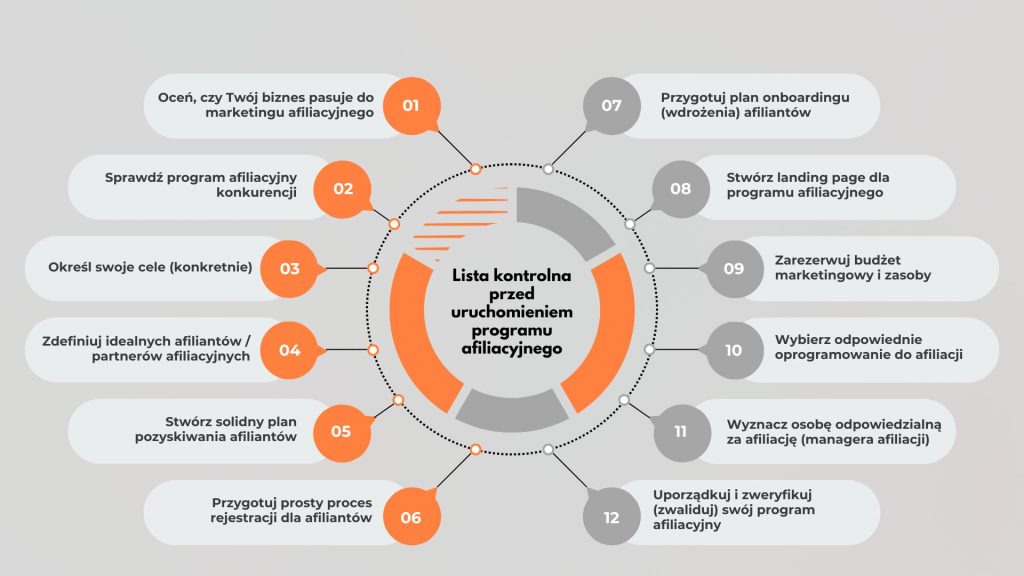
When an advertiser considers affiliate marketing, they think about sales. A mature advertiser also thinks about where and how the brand will be promoted. Affiliate marketing is an ecosystem of partners — and that is both its strength and its risk.
An affiliate expert defines the framework of cooperation so that the campaign:
At WebeAds, this is the stage at which permitted promotion models and quality standards are defined precisely. Thanks to this, affiliate marketing can grow without losing control.
If you want affiliate marketing that drives sales while also strengthening your brand, join the WebeAds network — click and let’s talk about the rules before launch.
At the end, the affiliate expert does the thing that distinguishes an expert approach from simply “throwing an offer into the network”: they make a decision.
It may be:
It may sound “strict,” but it is fair. Affiliate marketing launched without solid foundations costs twice: first in budget and time, and second in reputation (yours and the network’s). An affiliate expert would rather pause the launch and improve the necessary elements than start a program that will face friction from the very beginning.
Click, join the WebeAds network, and find out whether your offer is ready for expert affiliate marketing.
Advertisers often ask: “What matters more — the affiliate network or the offer?” The answer is: what matters more is the way the program is launched and managed. Because affiliate marketing is not just a list of partners, but a system: offer + rules + technology + quality.
Affiliate marketing managed by an affiliate expert:
At WebeAds, this is the core of the approach: an affiliate network in which an affiliate expert stands on the advertiser’s side before the campaign even begins.
An offer evaluation by an affiliate expert is not just “a formality before launch,” but the most important stage in determining whether affiliate marketing will become a scalable, predictable, and brand-safe channel for the advertiser. Before a campaign goes live, three things need to be verified: whether the economics make sense (margin and LTV), whether the offer makes sense for affiliates (attractiveness and risk from their perspective), and whether the technological foundations will not undermine trust (tracking, attribution, integrations, and traffic quality control).
If these elements are in place, affiliate marketing stops being a “test” and becomes a sales system. If they are not, the campaign usually ends in chaos: disputes over tracking, poor traffic quality, cannibalization of other channels, and frustration on both sides.
That is exactly why, at WebeAds, affiliate marketing begins with verification: an affiliate expert decides whether to launch immediately, what should be improved, or whether to postpone the launch until the offer is ready.