
Affiliate marketing is a fascinating world where companies and individual publishers collaborate to promote each other and generate profits. In today’s fast-growing digital landscape, affiliate marketing has become one of the most effective ways to increase sales, build a brand, and generate passive income. But what exactly is affiliate marketing? How does it work, how does it differ from other forms of promotion, and why is it worth using?
In affiliate marketing, affiliates play a key role by using various channels to promote advertisers’ products or services. These can include blogs, websites, social media, or even YouTube channels. Each affiliate receives a unique affiliate link that is used to track conversions. When a user clicks on such a link and makes a purchase or completes another action defined by the advertiser, the affiliate earns acommission.
For the advertiser, the benefit is that they only pay for results – for example, for actual sales, which makes affiliate marketing a form of performance marketing. Affiliates, on the other hand, can generate profits this way without the need to have their own product.
To fully leverage the potential of affiliate marketing, it is worth understanding how affiliate networks and programs work, as they support affiliates in promoting products and services.
An affiliate network provides the software and the entire technical infrastructure that makes cooperation between advertisers and publishers possible. Publishers have free access to affiliate tools that allow them to recommend products effectively, such as:
WebePartners and WebeAds networks offer different benefits depending on the partners’ needs.
Sign up for webeAds and gain access to exclusive tools to boost your sales!
Click here and discover more!
TRY IT FOR FREE!
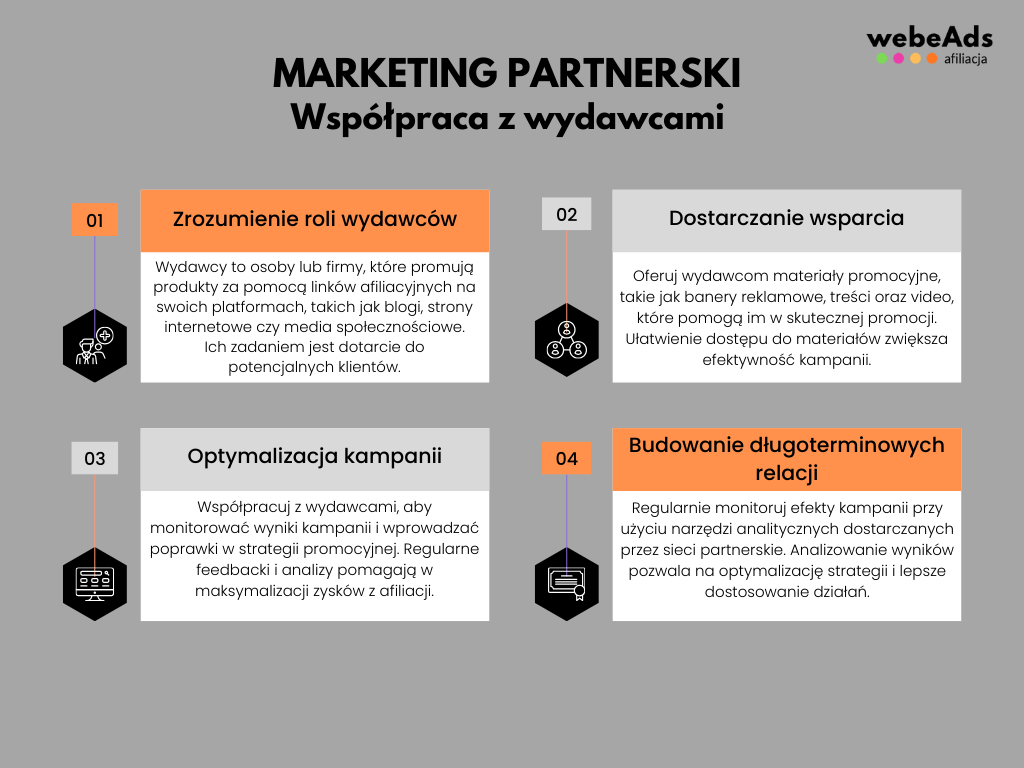
Affiliate marketing is based on effective cooperation between affiliates and advertisers. Here are some key principles for successfully working with advertisers.
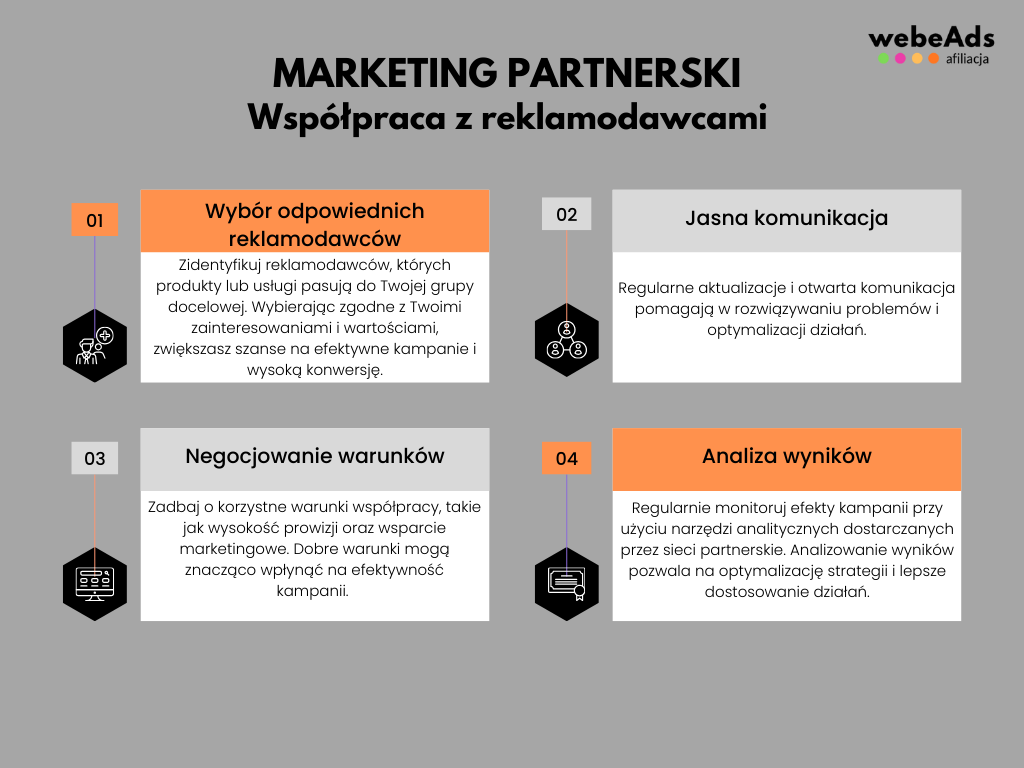
Publishers play a key role in affiliate marketing. Here is how to work effectively with publishers.
Effective cooperation with advertisers and publishers is the key to success in affiliate marketing and can significantly impact achieving better results and increasing affiliate profits.
Earning is the final step of working with an affiliate network. There are several payment models.
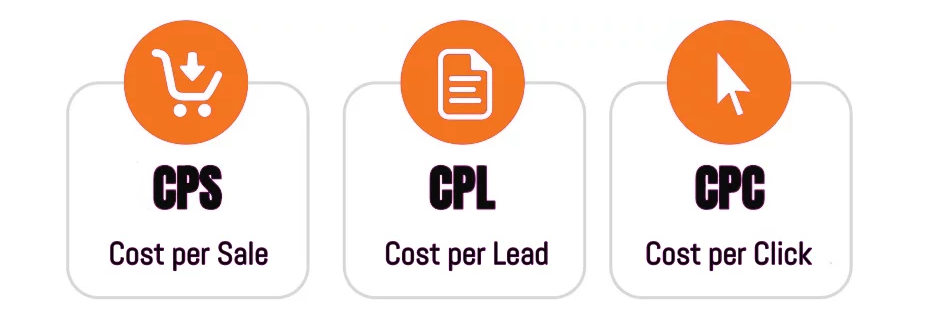
The most popular payment model in affiliate marketing for ecommerce is CPS (Cost Per Sale). The publisher receives a commission for every sale completed through their referral via any affiliate tool.
Another popular model is CPL (Cost Per Lead). The publisher does not receive a commission from sales, but a fixed rate for delivering a specific action (generating a sales lead), which is defined in the affiliate program terms. In the CPL model, actions such as filling out a contact form, registering on a website, subscribing to a newsletter, downloading an ebook, or signing up for a training are most commonly rewarded. This model is most often used by financial institutions, insurance companies, or training providers.
Sign up for webeAds and gain access to exclusive tools to boost your sales as a small e-commerce store!
Click here and discover more!
TRY IT FOR FREE!
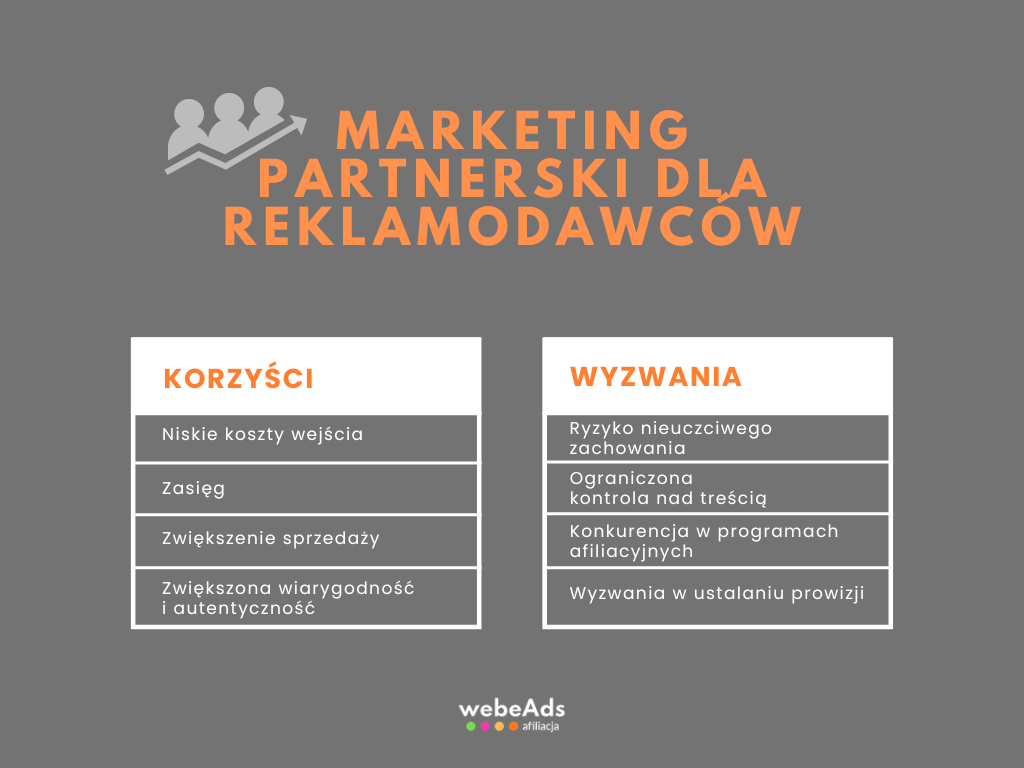
Affiliate marketing offers many benefits, including cost efficiency and broad reach, but it also comes with challenges such as quality control and the risk of dishonest behavior. To fully unlock the potential of affiliate marketing, it is worth managing your program well and working with reliable affiliates. We encourage you to explore other articles on the WebeAds blog, where you will find more practical tips and information about affiliate marketing and beyond.
You may also be interested in: